
Introduction
Edge Computing is changing the way data moves through modern networks. Instead of sending every byte of information to a distant cloud server, Edge Computing processes data closer to where it is actually generated — on local devices, sensors, or nearby servers. This shift is helping businesses reduce delays, save bandwidth, and make faster decisions in real time. If you want to build a strong foundation in this space, Eduonix AI Computing article is a great place to start learning the fundamentals hands-on.
As the number of connected devices continues to grow, the amount of data being generated at the network’s edge is increasing rapidly. Smart cameras, industrial machines, autonomous vehicles, healthcare devices, and IoT sensors constantly produce data that needs to be analyzed and acted upon. Sending all of this information to a centralized cloud can create delays and increase network traffic.
Edge Computing addresses this challenge by bringing computing and data processing closer to the source. This allows organizations to analyze important information locally and respond almost instantly, while only sending selected data to centralized cloud systems for storage or further processing. As a result, Edge Computing can improve performance, reliability, and efficiency across a wide range of applications.
But how does Edge Computing actually work, and what makes it different from traditional cloud computing? Let’s explore its architecture, key components, benefits, and real-world applications.
What Is Edge Computing?
At its core, Edge Computing is a distributed computing model that brings computation and data storage closer to the devices that need it, rather than relying on a centralized cloud data center. Think of a security camera analyzing footage on-site instead of streaming raw video to a faraway server. That local processing step is Edge Computing in action.
How Does Edge Computing Work?
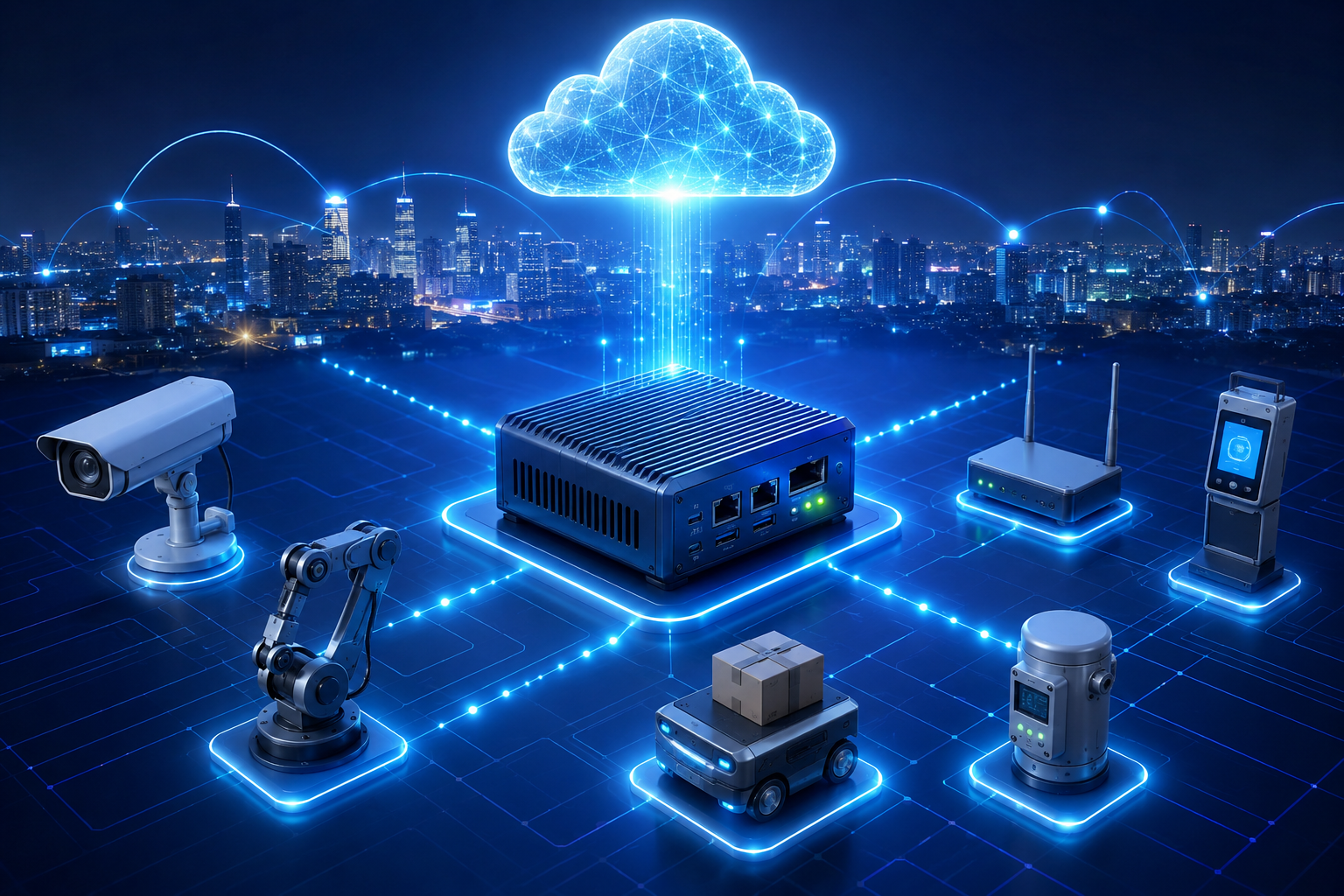
Edge Computing works by placing small-scale data centers, gateways, or processing units near the “edge” of the network — close to sensors, IoT devices, or end users. Data is analyzed and acted upon locally, and only the essential, processed information is sent to the cloud. This drastically cuts down on the round-trip time data would otherwise take to travel to a centralized server and back. Analysts at Gartner have noted that the share of enterprise data created and processed outside a traditional centralized data center or cloud was projected to jump from around 10% in 2018 to roughly 75% by 2025, showing just how rapidly this model is being adopted.
The process typically involves several stages. First, connected devices such as sensors, cameras, machines, or smartphones collect data from their surroundings. Instead of immediately sending all of this raw information to a remote cloud server, the data is transmitted to a nearby edge device or edge server.
At the edge, the data is filtered, analyzed, and processed using computing resources located close to the source. Time-sensitive tasks can be completed locally, allowing systems to respond quickly without depending on a distant data center. For example, an industrial sensor can detect an unusual change in machine temperature and trigger an alert immediately rather than waiting for the data to travel to the cloud and return.
Once the local processing is complete, only relevant or summarized information may be sent to the centralized cloud. The cloud can then handle tasks such as long-term data storage, advanced analytics, model training, system-wide monitoring, and application management. This creates a distributed approach where edge devices handle immediate processing while the cloud manages larger-scale operations.
This combination of edge and cloud computing allows organizations to balance speed, bandwidth usage, scalability, and centralized control. It is particularly valuable for applications where even a small delay can affect performance, safety, or the user experience.
Benefits of Edge Computing
Edge Computing offers several advantages that traditional cloud-only setups struggle to match:
Reduced Latency
Because data doesn’t need to travel far, Edge Computing enables near-instant responses — critical for applications like autonomous vehicles and industrial automation.
Lower Bandwidth Costs
By filtering and processing data locally, only relevant information is transmitted, easing the load on network bandwidth. For a deeper technical breakdown of how businesses are cutting infrastructure costs this way, this codecondo article offers useful insights.
Improved Reliability
Edge Computing systems can continue functioning even when connectivity to the central cloud is temporarily lost, since processing happens locally.
Enhanced Data Privacy
Sensitive data can be processed on-site without being transmitted across networks, reducing exposure to potential breaches.
Real-World Applications of Edge Computing
Edge Computing isn’t just a theoretical concept — it’s actively powering industries today:
- Healthcare: Wearable devices use Edge Computing to monitor patient vitals in real time and alert doctors instantly during emergencies.
- Manufacturing: Factories deploy Edge Computing to detect equipment faults on the production line before they cause costly downtime.
- Retail: Smart shelves and checkout systems use Edge Computing to track inventory and personalize customer experiences instantly.
- Autonomous Vehicles: Self-driving cars rely heavily on Edge Computing to process sensor data and make split-second driving decisions.
- Smart Cities: Traffic lights, surveillance systems, and utility grids use Edge Computing to manage resources efficiently without constant cloud dependency.


Final Thoughts
Edge Computing is no longer a futuristic concept — it’s a practical solution reshaping how data is processed across industries. From healthcare to smart cities, the demand for faster, more reliable, and privacy-conscious computing continues to grow. As more devices connect to the internet, Computing will only become more essential to how businesses operate. To explore more on emerging tech trends shaping the industry, check out this Eduonix article for additional perspective.