India is rapidly emerging as one of the world’s most exciting destinations for AI startups in India, fueled by a thriving startup ecosystem, world-class engineering talent, and increasing adoption of artificial intelligence across industries. Once recognized primarily for its IT services sector, the country is now producing innovative AI-first companies that are solving global problems in healthcare, finance, retail, education, and enterprise software.
The rise of Generative AI has accelerated this transformation. Businesses are no longer experimenting with AI—they are integrating intelligent systems into customer service, software development, business operations, marketing, and decision-making. At the same time, government initiatives promoting digital infrastructure, cloud adoption, and AI research have created a favorable environment for entrepreneurs and investors alike.
Another major factor driving this growth is the availability of highly skilled developers graduating from institutions such as the IITs, IISc, and leading universities, combined with a strong open-source community. This talent pool has enabled Indian founders to build globally competitive AI products rather than merely providing technology services.
Investors have taken notice. Venture capital firms, corporate investors, and international funds continue to invest in Indian AI startups, recognizing the country’s potential to become a global AI innovation hub. Companies focusing on enterprise automation, multilingual AI, healthcare diagnostics, and conversational AI have attracted significant funding and enterprise customers worldwide.
In this article, we’ll explore the factors behind India’s AI boom, the sectors experiencing the fastest innovation, and the startups creating the biggest impact in 2026. Whether you’re an entrepreneur, investor, software engineer, or technology enthusiast, you’ll gain insights into the companies shaping the future of artificial intelligence in India.
Why 2026 Could Be the Biggest Year for AI Startups in India
The Indian AI ecosystem has reached a pivotal moment. Advances in large language models (LLMs), enterprise AI adoption, and increased investment are creating opportunities for startups to compete on a global scale. Unlike earlier technology waves, today’s AI companies are building original products, proprietary models, and scalable SaaS platforms that address complex business challenges.
Explosion of Generative AI
Generative AI has become the foundation for a new generation of applications. Businesses are using AI to automate customer support, create marketing content, summarize documents, write software code, and improve employee productivity.
The widespread availability of foundation models has lowered development barriers, allowing startups to focus on specialized solutions rather than building every component from scratch. As a result, many Generative AI startups in India are developing industry-specific copilots for banking, healthcare, legal services, education, and manufacturing.
Enterprise customers are particularly interested in AI copilots that can automate repetitive workflows while maintaining data privacy and regulatory compliance. This demand is driving rapid innovation across the Indian AI landscape.
Increasing Startup Funding
Funding activity continues to strengthen despite broader economic uncertainty. Investors increasingly favor startups with strong enterprise customers, recurring revenue, and practical AI applications over purely experimental technologies.
Several factors are contributing to increased AI startup funding in India:
- Growing enterprise demand for AI solutions
- Government-backed innovation programs
- Global venture capital interest in AI-first companies
- Corporate partnerships with startups
- Expansion of AI-focused accelerator programs
Rather than pursuing growth at any cost, many investors now prioritize sustainable business models that combine cutting-edge AI with measurable business value.
India’s AI Talent Advantage
India’s greatest competitive advantage remains its technical workforce. Thousands of AI engineers, data scientists, and software developers graduate each year from premier institutions, while experienced professionals contribute to open-source AI projects used around the world.
Several strengths support this advantage:
- Strong engineering education
- Active research communities
- Competitive development costs
- Large English-speaking workforce
- Growing expertise in machine learning and deep learning
- Expanding developer communities contributing to open-source AI
This combination enables startups to innovate quickly while remaining cost-efficient compared to many global markets.
Categories Driving AI Innovation in India
AI adoption is accelerating across nearly every major industry. While some startups build horizontal AI platforms, many focus on solving specific industry challenges through domain expertise and specialized models.
Enterprise AI
Enterprise AI remains one of the fastest-growing segments. Startups are developing intelligent assistants, workflow automation platforms, AI-powered analytics, and document processing tools that improve operational efficiency.
These Enterprise AI startups help organizations reduce manual work, accelerate decision-making, and improve customer experiences through intelligent automation.
Healthcare AI
Healthcare has become a major focus area for AI healthcare startups. Solutions now assist with medical imaging, disease detection, patient risk assessment, hospital operations, and remote diagnostics.
AI enables healthcare professionals to process large volumes of clinical data more efficiently while supporting faster and more accurate diagnoses.
FinTech AI
Financial institutions increasingly rely on AI for fraud detection, credit assessment, customer verification, regulatory compliance, and personalized financial services.
Many AI fintech startups are combining machine learning with financial expertise to improve security, reduce operational costs, and deliver better customer experiences.
Education AI
Artificial intelligence is reshaping education through personalized learning platforms, intelligent tutoring systems, automated assessments, and AI-powered content generation.
Modern educational platforms adapt learning experiences based on individual student performance, making education more engaging and accessible.
Retail AI
Retail businesses are leveraging AI for demand forecasting, product recommendations, inventory optimization, visual search, and customer engagement.
AI-powered analytics help retailers better understand consumer behavior and optimize both online and offline shopping experiences.
Manufacturing AI
Manufacturers are adopting predictive maintenance, computer vision, robotics, and quality inspection systems powered by artificial intelligence.
These technologies reduce equipment downtime, improve production efficiency, and minimize operational risks.
Agriculture AI
Agricultural startups are using AI to improve crop monitoring, irrigation planning, soil analysis, pest detection, and yield prediction.
With agriculture remaining a vital sector of India’s economy, AI solutions are helping farmers make data-driven decisions while improving sustainability.
Cybersecurity AI
As cyber threats become increasingly sophisticated, AI-powered cybersecurity platforms are helping organizations detect anomalies, prevent attacks, and automate incident response.
Machine learning models can identify unusual network behavior much faster than traditional security systems, enabling faster threat mitigation.
Top AI Startups in India Creating Buzz (2026)
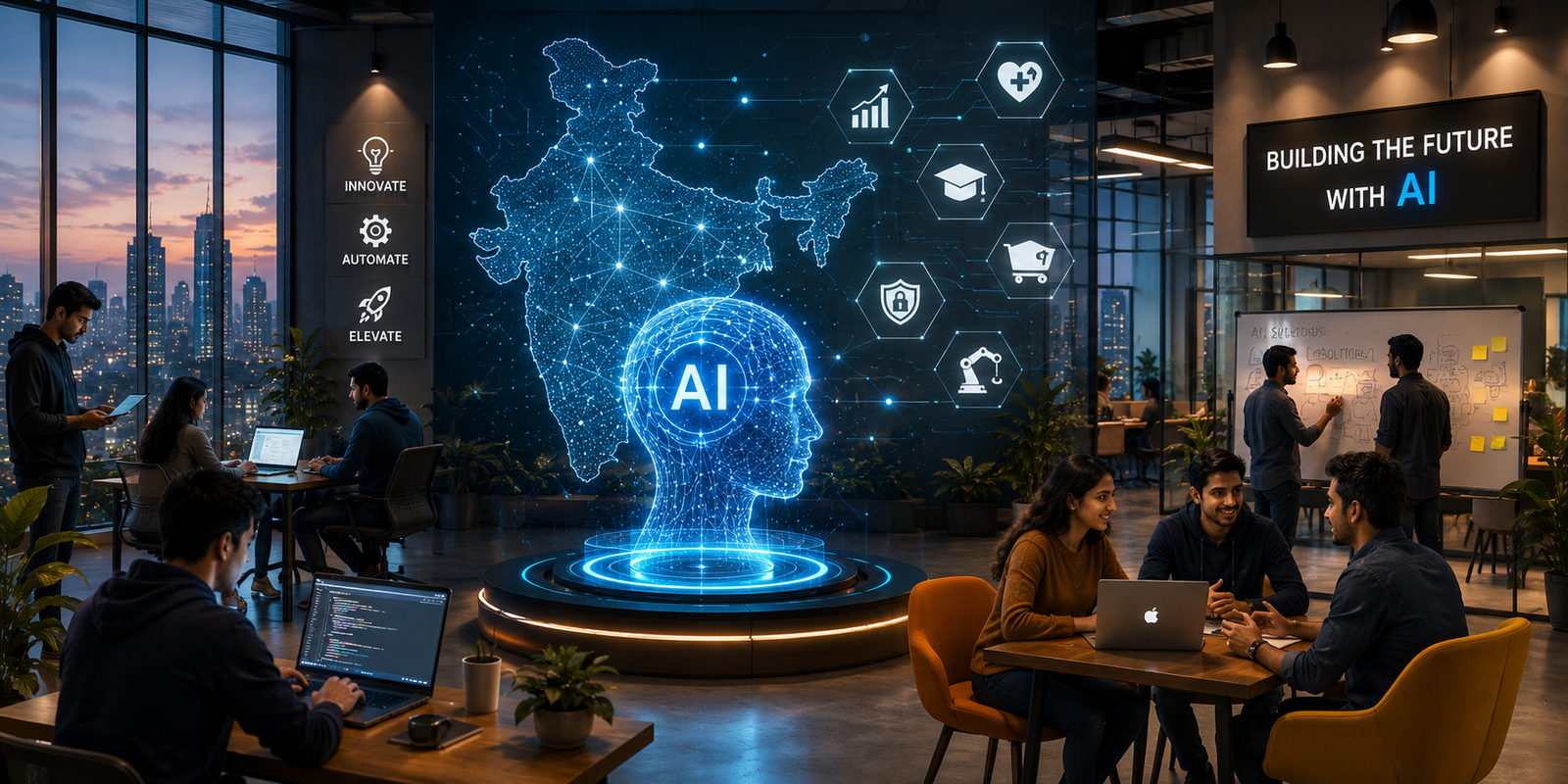
India’s AI landscape is more diverse than ever before. From building indigenous large language models to transforming healthcare, finance, customer service, and enterprise automation, these startups are helping position India as a global AI innovation hub. Below are some of the most influential AI startups in India making headlines in 2026.
Krutrim
Founded by: Bhavish Aggarwal
Krutrim has emerged as one of the most talked-about AI startups India after launching India’s own family of large language models. The company aims to develop AI infrastructure designed specifically for Indian languages and businesses.
AI Specialization: Large Language Models (LLMs), Generative AI, Cloud AI Infrastructure
Products: Krutrim Assistant, Krutrim Cloud, AI Models for Indian Languages
Customers: Enterprises, Developers, Government Organizations
Why It Matters: By focusing on multilingual AI and sovereign AI infrastructure, Krutrim is reducing dependence on foreign AI platforms while accelerating India’s AI ecosystem.
Sarvam AI
Founded by researchers with deep expertise in machine learning, Sarvam AI is developing foundation models optimized for India’s linguistic diversity.
AI Specialization: Multilingual LLMs, Enterprise AI, AI for Bharat
Funding: Backed by leading global investors.
Products: Indian language AI models, enterprise APIs, conversational AI.
Market Impact: Sarvam AI enables businesses and government agencies to deploy AI solutions across multiple regional languages, making digital services more inclusive.
Gnani.ai
Gnani.ai specializes in voice-first artificial intelligence that understands multiple Indian languages and accents.
AI Specialization: Voice AI, Speech Recognition, Conversational AI
Customers: Banks, Telecom Companies, Customer Support Centers
Recent Milestone: Expansion of multilingual speech recognition capabilities.
Its AI-powered voice assistants help businesses automate customer interactions while improving accessibility for users who prefer voice over text.
Yellow.ai
Yellow.ai has become one of the fastest-growing AI SaaS startups by offering conversational AI platforms for enterprises worldwide.
AI Specialization: Customer Service Automation
Products: AI Chatbots, Voice Bots, Omnichannel Customer Support
Customers: Large enterprises across retail, banking, healthcare, and travel.
Why It Matters: Businesses use Yellow.ai to automate routine customer interactions while improving response times and customer satisfaction.
Observe.AI
Observe.AI uses artificial intelligence to transform contact center operations through conversation intelligence.
AI Specialization: Contact Center AI
Products: Call Analytics, Agent Coaching, Quality Monitoring
Customers: Global enterprises and customer support teams.
Its AI analyzes customer conversations in real time, providing actionable insights that improve service quality and employee performance.
Niramai
Niramai is revolutionizing breast cancer screening through AI-powered thermal imaging technology.
AI Specialization: Healthcare AI
Industry: Medical Diagnostics
Products: AI-assisted breast cancer detection platform.
Why It Matters: The technology enables non-invasive, radiation-free screening that can improve early detection and increase accessibility in underserved regions.
Mad Street Den
Mad Street Den combines computer vision with retail intelligence to help brands deliver smarter shopping experiences.
AI Specialization: Retail AI
Products: Visual Search, Personalized Recommendations, Inventory Intelligence
Customers: Fashion retailers and global brands.
Its AI solutions help retailers optimize inventory, personalize customer experiences, and improve operational efficiency.
Uniphore
Uniphore has established itself as a global leader in conversational AI and customer experience automation.
AI Specialization: Conversational AI
Products: Voice AI, Emotion Detection, Contact Center Automation
Customers: Fortune 500 enterprises.
With advanced speech analytics and automation capabilities, Uniphore helps organizations streamline customer engagement while reducing operational costs.
CoRover AI
CoRover AI develops intelligent virtual assistants used across government services and enterprise platforms.
AI Specialization: Government AI Assistants
Products: BharatGPT-based assistants, multilingual chatbots.
Customers: Government agencies, public sector organizations, enterprises.
Its multilingual capabilities make digital public services more accessible to citizens across India.
Pixis
Pixis focuses on AI-powered marketing automation that enables businesses to optimize advertising campaigns and customer acquisition.
AI Specialization: Marketing AI
Products: Campaign Optimization, Creative Intelligence, Growth Automation
Customers: E-commerce companies, digital brands, agencies.
Pixis helps marketers improve return on advertising spend using predictive AI models and automation.
Rephrase.ai
Acquired by Adobe, Rephrase.ai pioneered AI-generated personalized videos for businesses.
AI Specialization: AI Video Generation
Products: Personalized AI Videos, Digital Avatars
Customers: Marketing teams, sales organizations, enterprises.
Its platform enables brands to create customized video content at scale without traditional production costs.
Arya.ai
Arya.ai develops AI infrastructure for financial institutions seeking secure, explainable artificial intelligence.
AI Specialization: Financial AI
Products: Fraud Detection, Risk Analysis, Lending Automation
Customers: Banks, Insurance Companies, FinTech Firms.
The company’s emphasis on explainable AI helps organizations meet regulatory requirements while improving decision-making.
Signzy
Signzy simplifies banking operations through AI-powered identity verification and digital onboarding.
AI Specialization: Banking AI
Products: KYC Automation, Digital Onboarding, Fraud Prevention
Customers: Banks, NBFCs, Financial Institutions.
Its intelligent automation significantly reduces onboarding time while enhancing regulatory compliance.
Entropik
Entropik combines emotion AI with behavioral analytics to measure consumer reactions more effectively.
AI Specialization: Emotion AI
Products: Consumer Research Platform, Emotion Recognition
Customers: Global brands, market research agencies.
Businesses use its technology to understand customer engagement before launching products or marketing campaigns.
Skit.ai
Skit.ai develops intelligent voice automation platforms for enterprise customer support.
AI Specialization: Voice Automation
Products: AI Voice Agents, Contact Center Automation
Customers: Banks, Insurance Companies, Telecom Providers.
Its AI-powered voice assistants handle thousands of customer interactions simultaneously while maintaining natural conversations.
Comparison Table of India’s Leading AI Startups
| Startup | AI Category | Industry | Founded | Key Product | Primary Customers |
| Krutrim | LLMs | Enterprise AI | 2023 | Krutrim Assistant | Enterprises |
| Sarvam AI | Multilingual AI | Enterprise AI | 2023 | Indian LLMs | Developers, Businesses |
| Gnani.ai | Voice AI | Customer Service | 2016 | Voice Assistants | Banks, Telecom |
| Yellow.ai | Conversational AI | SaaS | 2016 | AI Chatbots | Global Enterprises |
| Observe.AI | Contact Center AI | Enterprise Software | 2017 | Conversation Intelligence | Contact Centers |
| Niramai | Healthcare AI | HealthTech | 2016 | Breast Cancer Detection | Hospitals |
| Mad Street Den | Computer Vision | Retail | 2013 | Visual AI | Retail Brands |
| Uniphore | Conversational AI | Enterprise | 2008 | Voice Automation | Fortune 500 Companies |
| CoRover AI | Government AI | Public Services | 2016 | AI Assistants | Government & Enterprises |
| Pixis | Marketing AI | MarTech | 2018 | AI Marketing Platform | Brands |
| Rephrase.ai | AI Video | Marketing | 2019 | AI Video Generation | Enterprises |
| Arya.ai | Financial AI | FinTech | 2013 | Risk Intelligence | Banks |
| Signzy | Banking AI | FinTech | 2015 | Digital KYC | Financial Institutions |
| Entropik | Emotion AI | Consumer Research | 2016 | Emotion Analytics | Global Brands |
| Skit.ai | Voice Automation | Customer Support | 2016 | AI Voice Agents | Enterprises |
Emerging AI Trends Among Indian Startups
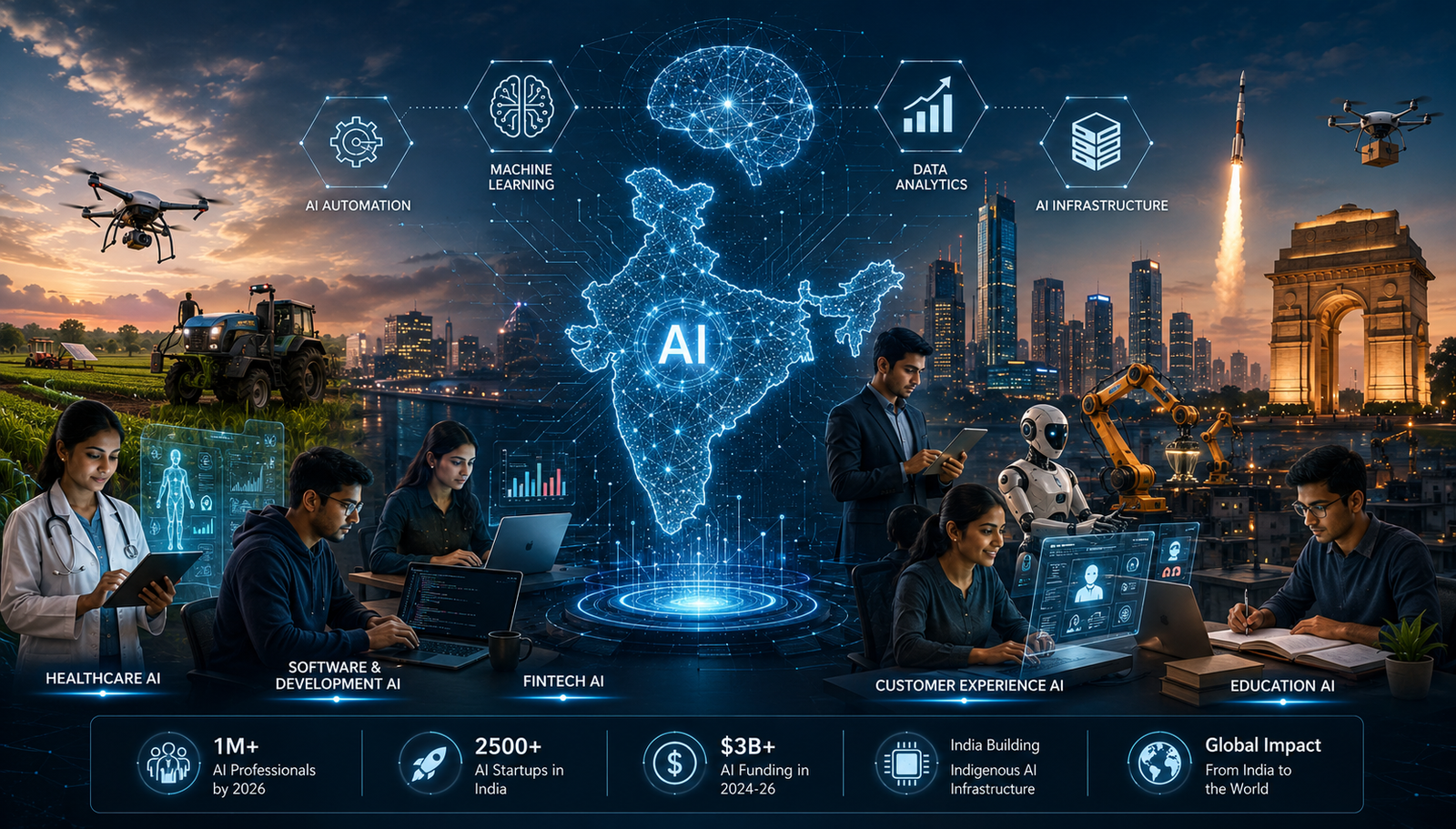
As the Indian AI ecosystem matures, startups are shifting beyond traditional machine learning applications toward advanced, domain-specific solutions. These emerging trends are redefining how businesses deploy artificial intelligence while creating new opportunities for entrepreneurs and investors.
Agentic AI
One of the biggest developments in 2026 is the rise of Agentic AI—AI systems capable of planning, reasoning, and completing multi-step tasks with minimal human intervention. Instead of simply answering questions, AI agents can manage workflows, analyze data, generate reports, and coordinate with other software tools.
Indian startups are increasingly incorporating autonomous AI agents into enterprise software to improve operational efficiency and reduce repetitive manual work.
AI Employees
Organizations are beginning to adopt AI-powered digital employees that assist with customer support, HR operations, finance, scheduling, and document management.
Rather than replacing human teams, these AI assistants help employees focus on strategic and creative work while automating routine tasks.
Vertical AI
Instead of developing general-purpose AI, many startups now build industry-specific solutions tailored for sectors such as banking, healthcare, manufacturing, logistics, and legal services.
This vertical approach delivers higher accuracy because AI models are trained using specialized industry knowledge and workflows.
AI Infrastructure
Growing demand for enterprise AI has increased investment in cloud infrastructure, GPU computing, model deployment platforms, and developer tools.
Several Indian companies are building AI infrastructure that enables organizations to securely deploy and scale machine learning applications without relying entirely on international cloud providers.
Open-Source AI
Open-source development continues to accelerate innovation. Developers can customize models, improve transparency, and build solutions more quickly using community-driven AI frameworks.
For startups with limited budgets, open-source technologies significantly reduce development costs while encouraging rapid experimentation.
Multilingual AI
India’s linguistic diversity presents unique challenges and opportunities. Startups are building language models capable of understanding and generating content across numerous Indian languages.
These innovations improve accessibility for millions of users and support digital inclusion across education, governance, healthcare, and financial services.
AI for Bharat
Beyond urban markets, startups are creating AI solutions specifically designed for rural communities and small businesses.
Applications include:
- Agricultural advisory systems
- Local-language education platforms
- Healthcare accessibility
- Digital financial services
- Government service delivery
This focus on inclusive innovation is expanding AI adoption throughout the country.
Industries Being Transformed by Indian AI Startups
Artificial intelligence is no longer limited to technology companies. It is becoming a foundational capability across nearly every major industry.
Banking & Financial Services
Banks use AI to detect fraud, automate loan processing, assess credit risk, perform KYC verification, and deliver personalized financial recommendations. AI-powered chatbots also improve customer service by providing instant support around the clock.
Healthcare
Hospitals leverage AI for medical imaging, disease detection, patient monitoring, clinical documentation, and predictive analytics. These technologies enable faster diagnoses while helping healthcare professionals manage growing patient volumes.
Retail & E-commerce
Retailers rely on AI for personalized recommendations, inventory forecasting, dynamic pricing, customer segmentation, and demand prediction. These capabilities improve customer experiences while increasing operational efficiency.
Manufacturing
Factories implement predictive maintenance, quality inspection using computer vision, robotics, and supply chain optimization to reduce downtime and improve production accuracy.
Logistics & Supply Chain
AI helps optimize delivery routes, forecast demand, automate warehouse operations, and improve fleet management, reducing operational costs while enhancing delivery performance.
Agriculture
Farmers increasingly benefit from AI-powered crop monitoring, pest detection, weather forecasting, irrigation planning, and yield prediction, enabling more sustainable farming practices.
Government Services
Public agencies deploy multilingual AI assistants, citizen support chatbots, document processing systems, and smart governance platforms that make public services faster and more accessible.
Education
Educational institutions use AI-powered tutoring, adaptive learning systems, automated grading, and personalized learning recommendations to improve student outcomes.
Human Resources
HR teams leverage AI for resume screening, candidate matching, interview scheduling, workforce analytics, and employee engagement, allowing recruiters to focus on strategic hiring decisions.
Marketing
Marketing professionals use AI to generate content, optimize advertising campaigns, analyze customer behavior, personalize messaging, and improve campaign performance through predictive analytics.
Challenges Faced by India’s AI Startup Ecosystem
Despite remarkable growth, AI startups in India continue to face several obstacles that require careful planning and long-term investment.
Funding Competition
Although AI investment remains strong, startups face increasing competition for venture capital. Investors now prioritize sustainable revenue models, product-market fit, and enterprise adoption over rapid expansion alone.
Infrastructure Costs
Training advanced AI models requires significant computing power and cloud resources. High infrastructure costs remain a challenge, particularly for early-stage startups.
GPU Availability
Access to high-performance GPUs continues to influence AI development timelines. Limited hardware availability and rising computing costs can slow product innovation.
Data Privacy
As AI systems process larger volumes of sensitive information, startups must prioritize responsible data handling, cybersecurity, and compliance with evolving privacy regulations.
AI Regulations
Governments worldwide are developing frameworks to regulate artificial intelligence. Indian startups must remain adaptable as new governance standards emerge for transparency, accountability, and ethical AI deployment.
Talent Retention
While India produces exceptional AI engineers, retaining experienced professionals remains challenging due to increasing global demand and competitive hiring.
Global Competition
Indian startups compete with well-funded companies from the United States, Europe, and Asia. Continuous innovation, strong execution, and international expansion will be essential for maintaining global competitiveness.
Why Investors Are Closely Watching Indian AI Companies
Investor confidence in the Indian AI ecosystem continues to grow because AI adoption is becoming a long-term business priority across industries.
Key investment drivers include:
- Strong enterprise demand for AI-powered software.
- Rapid growth of AI-first SaaS businesses.
- Increasing global adoption of Indian technology products.
- Expansion into international markets.
- Government support for digital innovation and DeepTech.
- Growing potential for future IPOs and strategic acquisitions.
As enterprises accelerate digital transformation, startups that solve practical business problems with measurable ROI are likely to attract continued investment.
The Future of AI Startups in India Beyond 2026
The coming years are expected to redefine India’s role in the global AI landscape.
Several trends are likely to shape the next phase of growth:
- More AI unicorns focused on enterprise software.
- Development of indigenous large language models.
- Greater investment in AI chips and computing infrastructure.
- Expansion of robotics and industrial automation.
- Growth of AI operating systems and autonomous enterprise agents.
- Faster adoption of AI in healthcare diagnostics and precision medicine.
- Stronger AI governance frameworks promoting responsible innovation.
- Increased global expansion by Indian AI companies.
Rather than following global trends, Indian startups are increasingly creating technologies tailored to local challenges while building solutions that can scale internationally. This combination of affordability, engineering talent, and market diversity positions India as one of the world’s most promising AI innovation hubs.
Read more– How to Know If Your Enterprise Is Actually Ready for AI Before You Commit the Budget
Conclusion
The rapid growth of AI startups in India demonstrates how the country is evolving from a technology services hub into a global center for artificial intelligence innovation. Startups across enterprise software, healthcare, fintech, education, retail, and conversational AI are developing solutions that address real-world business challenges while serving customers across international markets.
The diversity of the Indian AI ecosystem, combined with a strong engineering workforce, increasing venture capital investment, and supportive digital infrastructure, creates significant opportunities for entrepreneurs, investors, and technology professionals. Although challenges such as infrastructure costs, talent retention, and regulatory compliance remain, the overall outlook for the sector is exceptionally positive.
As AI continues to transform industries, businesses that embrace intelligent automation and collaborate with innovative Indian AI startups will be well-positioned for long-term growth. With continued investment in research, responsible AI development, and global expansion, India has the potential to become one of the world’s leading forces in artificial intelligence over the next decade.