C and C++ have been declared “dead” more times than any other programming languages—but in 2026, they are more relevant than ever.
If you are searching for the best resources to learn C/C++, you are not alone. With so many tutorials, courses, and books available online, it has become difficult to identify what actually works—especially for beginners.
From powering operating systems and game engines to running high-performance applications, embedded systems, and even modern AI infrastructure at the hardware level, C and C++ continue to be the backbone of serious computing.
While languages like Python and JavaScript dominate rapid development, C and C++ dominate performance, control, and efficiency.
That’s exactly why developers, system engineers, and large tech companies still rely on them.
However, most learners struggle because:
- Many tutorials are outdated
- Learning paths are unclear
- Resources are scattered across platforms
So in this updated guide on the best resources to learn C/C++ in 2026, you will find:
- Carefully selected free and paid resources
- A complete C++ learning roadmap
- The best websites to learn C++ and C programming
- Recommended books and practice platforms
- A step-by-step approach to learn C and C++ effectively
Whether you want to learn C++ for free, build strong fundamentals, or become a system-level developer, this guide is designed to help you move in the right direction.
C++ Learning Roadmap (2026): Step-by-Step Guide for Beginners
If you are wondering how to learn C++ in 2026, following a structured roadmap is essential. Many beginners fail because they jump between random tutorials instead of following a clear path.
This C++ learning roadmap will help you understand exactly what to learn at each stage, from fundamentals to advanced topics.
Below is a practical roadmap designed to take you from beginner to advanced level with clear milestones.
Stage 1: Learn the Fundamentals (2–4 Weeks)
Start with the basics of C programming and build a strong foundation.
Topics to cover:
- Syntax and program structure
- Variables and data types
- Operators and expressions
- Conditional statements (if/else, switch)
- Loops (for, while, do-while)
- Functions and basic input/output
Goal: Be able to write simple programs and understand how code executes.
This stage is crucial for anyone looking for C++ tutorials for beginners or trying to learn C and C++ step by step.
Stage 2: Core Programming Concepts (3–6 Weeks)
This stage introduces the most important concepts that differentiate C/C++ from high-level languages.
Topics to cover:
- Pointers and memory management
- Arrays and strings
- Structures in C
- File handling
- Debugging techniques
Goal:
Understand how memory works and gain control over low-level programming.
Stage 3: Intermediate C++ Concepts (4–8 Weeks)
Move into C++ and start learning structured and reusable programming techniques.
Topics to cover:
- Classes and objects
- Constructors and destructors
- Inheritance and polymorphism
- Function overloading and operator overloading
- Introduction to the Standard Template Library (STL)
Goal:
Write modular, reusable, and maintainable code using object-oriented programming.
Stage 4: Advanced Topics (6–10 Weeks)
Focus on performance, efficiency, and deeper system-level understanding.
Topics to cover:
- Data structures (linked lists, stacks, queues, trees, graphs)
- Algorithms (sorting, searching)
- Dynamic memory allocation
- Multithreading and concurrency
- Performance optimization
Goal:
Build efficient applications and solve complex problems.
Stage 5: Real-World Application
Apply your knowledge by choosing a specialization.
Possible paths:
- System programming (Linux tools, compilers)
- Game development (C++ with game engines)
- Embedded systems and IoT
- Competitive programming
Goal:
Work on real-world projects and build a strong portfolio.
Key Differences Between C and C++ Programming
| Feature | C | C++ |
|---|---|---|
| Programming Paradigm | Procedural | Multi-paradigm (Procedural + OOP) |
| Abstraction Level | Low | High |
| Object-Oriented Programming | Not supported | Fully supported |
| Standard Library | Limited | Extensive (STL included) |
| Memory Management | Manual | Manual with advanced tools |
| Performance | Very high | Very high |
| Use Cases | Operating systems, embedded systems | Applications, game engines, large systems |
C is ideal for learning core programming and hardware-level operations, while C++ is better suited for building complex, scalable applications.
Best Websites to Learn C++ and C Programming
If you are looking for the best websites to learn C++, several high-quality platforms offer structured lessons, coding exercises, and real-world examples.
Some platforms focus on beginners, while others are better suited for advanced learners.
In the next section, we will explore a mix of:
- Free learning platforms
- Paid courses
- Documentation and reference sites
This will help you choose the best C++ resources for beginners as well as advanced developers.
Why Learn C/C++ in 2026?
As stated earlier, C/C++ languages are one of the most popular languages that are used widely by programmers throughout the world. The concepts of C and the syntax have stood the test of time and now, it is influencing other programming languages, even the latest ones like Go.
Even if you have decided to create web applications or front-end components for all your upcoming life then also learning C programming will help you in understanding how hardware and software interact. Apart from this, don’t forget that these 2 languages are everywhere. Actually, C in particular powers a lot more techs than we give it credit for and similarly, some of your favorite software including the web browser on which you are reading this blog- is built using the C++ programming language.
C might be a good base but on several occasions, you have to learn C++ along with its paradigms for software development. In case, if you are looking to create software, sophisticated productivity tools, great desktop games or complex computationally intensive programs, or even if you want to learn programming language that allows you to interact with a computer’s hardware directly, then C/C++ languages are the perfect fit for you.
Still not convinced? Here are my top 10 reasons why you should learn C/C++ programming languages
1. High Demand in Specialized Domains
C and C++ developers are in demand in domains where performance and hardware-level control are critical. These include:
- System programming
- Embedded systems
- Game development
- High-performance computing
- Financial systems (low-latency trading)
While salary depends on experience and region, developers with strong C/C++ skills are often valued for roles that require deep technical expertise.
2. Large Community
Both C & C++ languages have a very large community of both regular and advanced programmers who are ready to help anyone in case any support is required or to solve any queries. You can also find many of the resources on the internet easily that will help you to learn and understand everything related to these programming languages. I have mentioned some of the best resources in the later section of this blog.
3. Thousands of Library Support
Both languages have extensive support for libraries. When it comes to C++, it has the STL i.e. Standard Template Library that is very useful for writing code quickly and compactly as per the requirement. Generally, it includes 4 major components such as containers, algorithms, functions, and iterators. Here, algorithms can be of different kinds like searching, sorting and so on. Functions help in working with the associated functions to be customized with the help of the parameters passed, and the iterators are used for working upon a sequence of values. Containers help in storing the classes for implementation of different data structures that are widely used such as hash tables, stacks, queues, lists, maps, sets, vectors, and others.
4. Widely Used in Databases and Backend Systems
Many popular databases such as MySQL and PostgreSQL are written in C, while others use C++ for performance-critical components.
C/C++ are preferred in such systems because they offer fine control over memory and execution speed.
5. Core Technology Behind Operating Systems
C plays a major role in the development of operating system kernels such as Linux and parts of Windows and macOS. C++ is also used in various system components and performance-critical modules.
Rather than entire systems being written in one language, modern operating systems use a combination of languages, with C and C++ forming a significant part of the core.
6. Embedded Systems
Since both these programming languages are closer to the hardware, it is quite useful to use these languages in embedded systems, as the software and hardware are closely couples. Today, there are several embedded systems like smartwatches, GPS systems, MP3 players and others that use C/C++ programming languages.
7. Cross-Platform Development
C and C++ support cross-platform development, but portability depends on how the code is written. By following standard practices and avoiding platform-specific dependencies, developers can build applications that run across multiple systems.
8. Compilers
Since C/C++ is closer to the hardware and are comparatively low-level languages, it is highly used in many compilers as a back end programming language. A top example of this is GCC or GNU Compiler Collection that is written in C and C++ programming language.
9. Used in Web Browsers

C++ is widely used in the development of modern web browsers, particularly in rendering engines and performance-critical components.
Browsers like Chrome, Firefox, and Safari rely on C++ for speed, efficiency, and system-level control.
10. Graphics
Various applications that need graphics like computer vision, digital image processing, screen reading programs, and others use C++ because of its high speed. This is also true for many games that include graphics as the main part of their structure.
Best Resources to Learn C/C++ in 2026- Free and Paid Websites
Best websites for learning C/C++ programming language
1. Eduonix
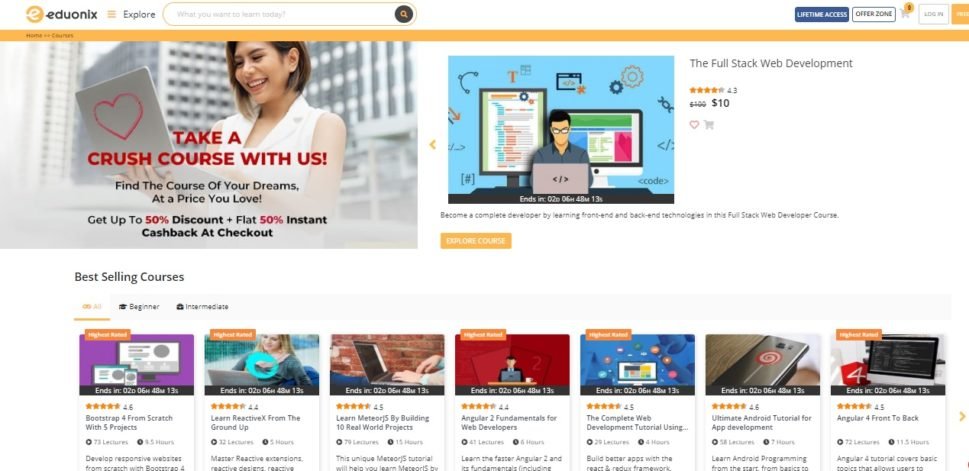
I’ll start this list with Eduonix. Remember there are tons of websites like Udemy, Coursera & others that offer curses on both the programming language, but what makes Eduonix unique is that it offers both Free and Paid courses.
And don’t think that all the free courses will just be ordinary online courses. In fact, they have made some of their highly-rated courses on C/C++ programming completely Free. And even if you are interested in learning some more advanced concepts or working on a specific project using C/C++ programming then you can get it at very low prices.
The best part of Eduonix is that they are in the industry for a decade now and they have collaborated with some of the world-class instructors who not only teaches every aspect of C/C++ programming languages but also other languages like Python, Java, JavaScript along with trending technologies such as AI, ML, Data Science, Web Development & so on.
2. LearnCPP
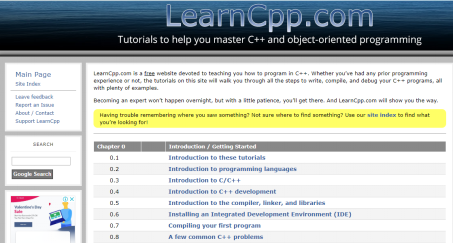
It is a website that includes a comprehensive series of tutorials that describe the C++ programming language. LearnCPP covers all the broad fundamentals of the language and includes sample code, quizzes and so much more to test your C++ knowledge.
It included some of the best technical tutorials that I have ever found on C++ programming you will ever find online. If this is your first programming language then you might find it a little intimidating but don’t worry, with time, you’ll get used to it. This website covers everything such as basics, functions, debugging, data types, operators, bit manipulation, object scope, control flow, arrays, strings, pointers, functions, object-oriented programming, inheritance, exceptions, standard library and so much more!
Read More: Learn About Inheritance in C++ Programming
3. CPlusPlus
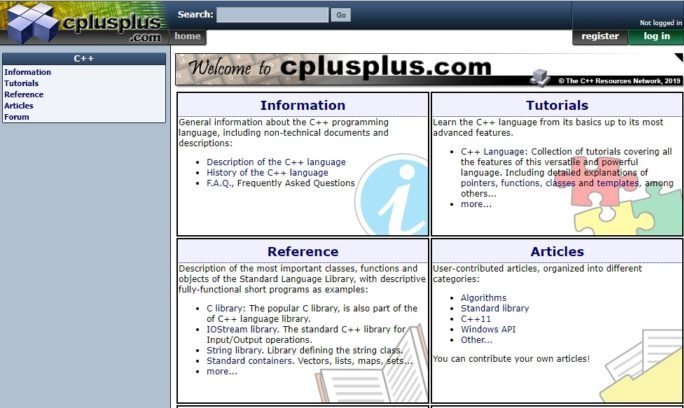
It is again a great website for you if you are looking to learn & master a C++ programming language. Though this website includes all the tutorials, articles and other information on the programming language, it is best used by programmers as a reference.
Here, you can look for multitudes of programming concepts that will help you in using certain techniques without any difficulties and without being stuck. It might not be beginner-friendly as it includes more jargon with respect to references but it includes some quality information related to C++ programming.
4. Cprogramming
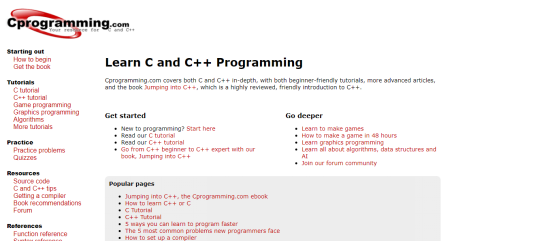
C programming has been on the website since 1998 and if you are not comfortable with the last 2 websites then you will find more luck on this website. It covers tutorials on both C and C++ programming languages. Apart from great tutorials, you can also find other goodies like advanced articles and highly-reviewed books on these languages.
From my perspective, the tutorial on this website is easier to understand and simple to navigate between different lessons. Here everything is more organized. Since you can find resources on both the programming languages in one place, it gets easier to compare and check out all the differences of both the languages.
Read More: Learn to Write C++ Programs on Linux
5. Stack Overflow
Stack Overflow is one of the most trusted developer communities where you can ask questions, explore solutions, and learn from real-world problems.
6. Include help
IncludeHelp provides tutorials, interview questions, and coding problems for C/C++. It is particularly useful for beginners preparing for technical interviews.
Best C/C++ Books for Beginners and Advanced Developers
1. C Programming Language, 2nd Edition
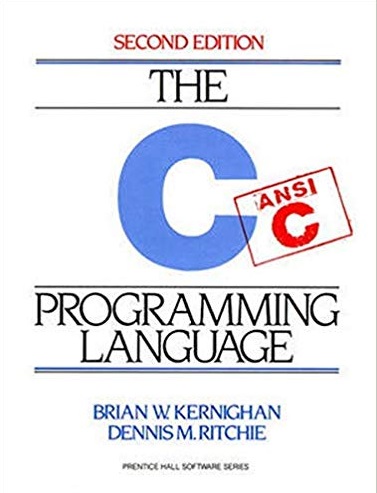
Whenever the name Dennis Ritchie comes, it is obvious that you are talking about C as this programming language was originally developed by Dennis Ritchie for making utilities running on UNIX. This book is written by Brian W. Kernighan and Dennis M. Ritchie themselves.
Both authors have done exceptionally good work in this book. They have created it as a complete guide to ANSI standard C programming language. Since it is written by the very developers who created this programming language, it covers all the concepts by going into details that give you a complete picture. The newer version of this book will help you in keeping up with the finalized ANSI standard for C. It also shows how to take advantage of the economy of expression, rich set of operators, data structures and improved control flow.
The 2nd Edition of this book is completely rewritten and includes extra examples along with additional problem sets for clarifying the implementation of difficult language constructs. This book consists of detailed coverage of the C programming along with the official reference manual of C language for at-a-glance help with declarations, syntax notation, scope rules, ANSI changes and so on.
As a whole, you can easily consider this book like the Bible of C programming language. Despite it requires you to have a basic knowledge of general programming, it will give you a complete picture of programming in C language.
2. Head First C: A Brain-Friendly Guide
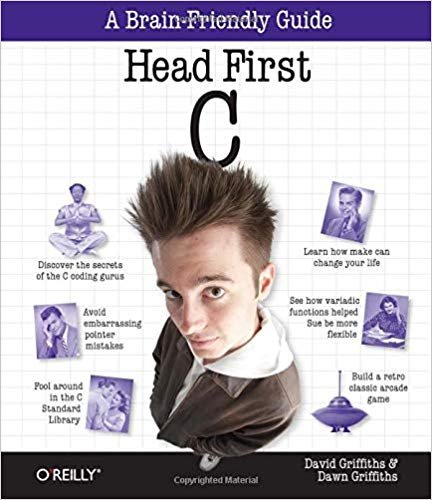
Have you ever read any of the books from the Head First series? If yes, then you are lucky. There is a Head First book for C programming language as well! If you have read any of the books before then you already know that their style of showing concepts is a bit different. This book is co-authored by David Griffiths & Dawn Griffiths and will be a complete learning experience for you. It will teach you to create C programs easily and efficiently.
This book is popular for teaching C programming language in a unique way that is way beyond any how-to manuals and syntax. It helps you to become a great programmer by teaching you key areas such as basics of C programming language, dynamic memory management, pointers and command pointer arithmetic along with advanced concepts like network programming, multi-threading and so on.
This headfirst guide can be used as an accessible book for a college-level course and just like that, this book includes various projects that will stretch your abilities, test your skills and help you build confidence. It is a perfect resource to learn C language beyond the basics and will help you to understand how to use make tools, archiver to tackle real-world problems and the compiler.
Already the authors behind this book have made the statement that “your time is too valuable to waste struggling with new concepts”. This book uses the latest research in learning theory and cognitive science for crafting a multi-sensory learning experience. Head First C uses a visually rich format instead of a text-heavy approach that helps your brain to consume more and more.
3. Practical C Programming
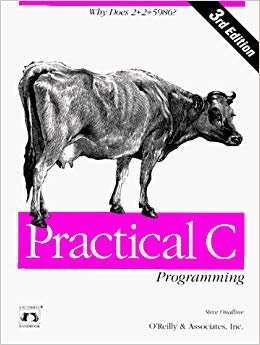
It is the only book that I believe has a no-nonsense practical approach for learning the C language. This has also made this book very popular among all the students and programmers. Steve Oualline is the author of this book, and he teaches you everything from the mechanics behind the C language to creating C programs that are easy to read to debugging and updating the C programs. In this book, practical rules are stressed more.
This book will not only teach you how to avoid all too common obfuscated uses of C programming but will also tell how to recognize these uses while you encounter them in existing programs related to C language. Because of this, programmers don’t struggle during maintenance.
Apart from the basic concepts, the Electronic Archaeology i.e. the art of going through someone else’s code is also explained. This 3rd edition book is also packed with popular C IDEs on Windows systems along with UNIX programming utilities.
Read More: Best C/C++ IDEs for Linux (2026) – Ranked for Beginners, Pros, & Ubuntu Users!
4. C++ Primer, 5th Edition

It is a highly comprehensive and popular book dedicated to fully updated and recast for the newly released C++ 11 standard. It will help you to learn the C++ programming language quickly, and you will be able to use this language in a modern and effective way. Its authors Stanley B. Lippman, Josée Lajoie, and Barbara E. Moo highlights all best practices of C++ language and also show how to use both the language i.e. C/C++ along with its standard library for writing powerful, readable and efficient code.
The authors have done a very good job of introducing the C++ standard library from the outset. This helps in learning all common facilities and functions that are useful in writing programs without mastering all the details of the C++ programming language. Many examples in this book have been revised as per the new features. It assists in demonstrating how to use all the features in the best possible way.
If you are new to C++ programming then C++ Primer 5th Edition will be a perfect fit for you. Moreover, it also discusses core C++ techniques and the concepts making itself a valuable resource for experienced programmers. You will love this book if you want to know all the C++ enhancements.
Some of the things that you will learn from this book are:
- Using all the new features of C++11 along with the standard library for building robust programs fast.
- High-level C++ programming.
- Examples that will help you decode best and the latest coding styles and program design techniques.
- The rationale behind the rules: why C++11 works as it does?
- Extensive cross-references that will help you connect all the insights and related concepts.
- Up to date learning aids and exercises that will more emphasize on key points. It will help you to avoid any pitfalls, reinforce what you have learned and promotes good practices.
Read More: Learn the basic Syntax in C++ Programming Language
5. C in a Nutshell: The Definitive Reference, 2nd Edition, Kindle Edition

It is one of the classics for learning programming in C language. The latest edition of this O’Reilly guide is co-authored by Peter Prinz and Tony Crawford, and is ideal for both beginners and experienced C/C++ programmers. They have given clear and detailed explanations of all the features of C programming language along with a runtime library including library functions, multithreading and type-generic macros that are relatively new in the 2011 C standard (C11).
You can even find the effects of unfamiliar functions and what standard library requires to behave along with typical examples. Apart from these, C, in a Nutshell, is packed with popular tools in the GNU software collection. Overall this book teaches you to build C programs with GNU make, test & debug your programs with the GNU debugger and compiling executable programs from C source code.
Some of the key things that you will learn from this book are:
- C language concepts and elements; having exclusively dedicated chapters on statements, memory management, types, pointers, I/O and so much more.
- C standard library along with standard headers and in-depth details of function reference.
- Instructions of C programming tools of GNU software collection along with its usage and implementation with the Eclipse IDE.
6. C Programming Absolute Beginner’s Guide
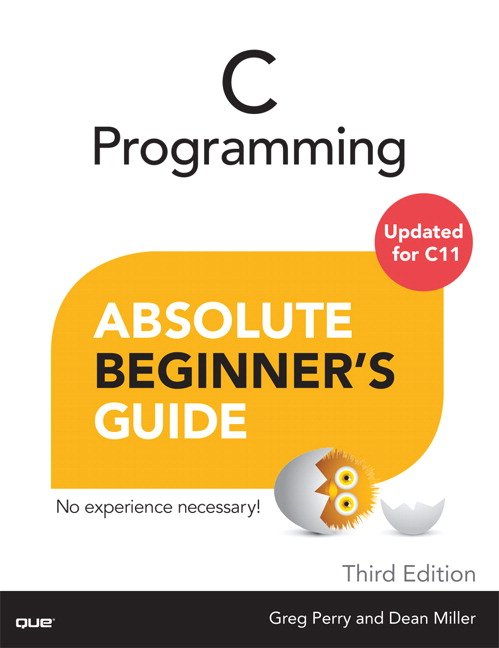
What else could be better than a resource that will help you learn and master something new in a way that is both easy and simple to understand? This absolute beginner’s guide for C programming does exactly the same! In C programming, often the learning curve is quite steep, and programmers need to find the right resource that caters to all the needs effectively.
The authors of this book Greg Perry & Dean Miller have successfully created one of the best beginner’s guides for writing C programs. Moreover, the skills gained from this book can also be used in practically any language. In other words, this book has simple practical instructions that will aid you in creating reliable & useful C code for mobile applications to high-quality games. Apart from all these, this beginner’s guide is updated for the new C11 standard and free, open-source tools.
Some of the key things that you will learn from this book are:
- Parts of C program
- How different parts of the C program fit together.
- Using computers’ memory more efficiently.
- Free C programming tools for OS X, Windows & Linux.
- Allowing C for handling all the maths behind your program.
- User interaction and responding to their inputs.
- Generating the output and then displaying it on the screen.
- Using preprocessing directives for creating more powerful programs.
- Exploiting variables by using expressions and assignments.
- Using simple built-in functions for building powerful data-entry routines.
- Manipulating text with strings.
- Using loops and other techniques for saving the extra effort and time.
- Storing information in a way that is easy to access and use.
- Using logical operators and testing data for controlling programs.
- Managing your data with arrays, data structures, and pointers.
- Using functions for making programs easier to maintain and write.
Read More: Learn About Strings in C++ Programming
7. The C++ Programming Language, 4th Edition
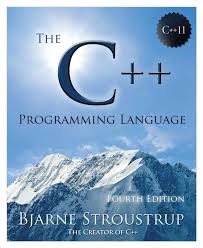
This book is written by none other than Bjarne Stroustrup, the creator of the C++ programming language. It dives deep into the C++11 programming language. And if you are someone who is looking to thoroughly master C++ language then this definitive guide will be the most suitable choice for you.
The “C++ Programming Language” is also one of the most popular, most trusted and widely read guides for C++ language. The latest version of this guide is comprehensively updated as per the C++11 standard. It is rewritten in an extensive way that presents the whole C++11 language, key design techniques, and standard library.
With this book, Stroustrup completely addresses all the changes that make C++11 feel like a completely new language. It also provides a guide for improving reliability, clarity, and performance.
8. Programming: Principles and Practice Using C++, 2nd Edition

It is the 2nd book in this list that is authored by the inventor of C++ i.e. Bjarne Stroustrup. This book was written exclusively for those who have never programmed before. It has tested with thousands and thousands of first-year university students and is also heavily used for self-study.
This book helps its readers to gain guidance and new insights by observing how an expert approaches the elements of his art. In general, Programming: Principles and Practice Using C++ introduces you to programming covering both generic programming and object-oriented programming.
It gives you a solid introduction to the C++ programming language along with modern C++ programming techniques from the beginning. It also covers the C++11 & C++14 features along with the standard library for simplifying the programming tasks.
Overall, the first section of this book covers all the essential concepts along with programming techniques, design, libraries and the features of C++ programming language. This significantly helps in writing a program that covers computation, input, output, and simple graphics.
The second part of the latter section of the book gives you insights into more sophisticated topics. It covers testing, text processing & other advanced concepts of C programming language. This book provides abundant reference materials, and you can find support supplements or source code from the author’s website.
9. C++20 Recipes: A Problem-Solution Approach
Authored by J. Burton Browning, Bruce Sutherland, C++ 20 recipes dives into the latest key factors of the language. It consists of spaceship operators, smart pointers & more. This guide covers the core knowledge of the language and some of the code templates available in the standard template library (STL).
A well-written explanation with various code samples, algorithms templates, parallel processing, multithreading, and numerical processes. You even get a look into 3D graphics programming code.
10. C++ System Programming Cookbook
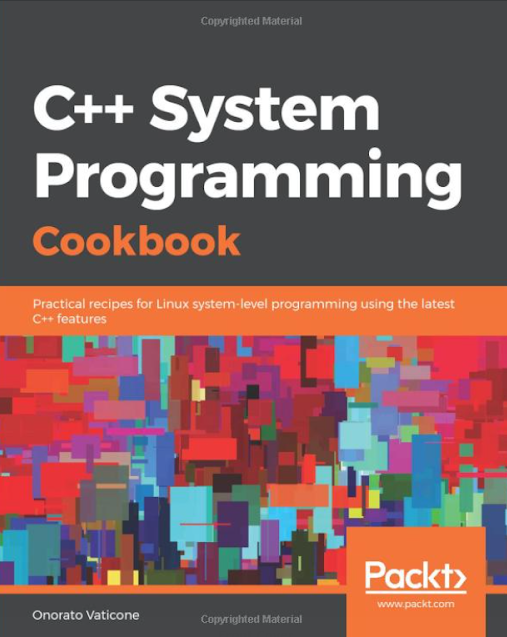
For all the C++ developers looking for ways to gain some practical knowledge, this should be on your list. They help you learn about system programming with a practical approach. You get to learn the new features C++ have to offer, with getting the knowledge of creating a concurrent & robust system. One can even learn about C++ inbuilt frameworks & libraries to design amazing systems. It even covers time interfaces, signals, and CPU scheduling.
11. C++ Crash Course
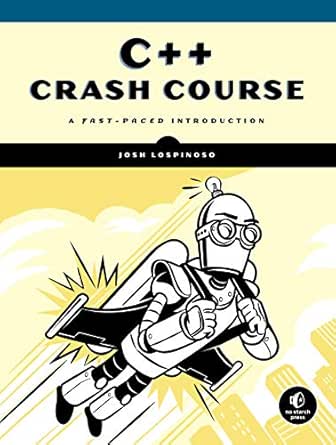
For getting an advanced understanding of C++, you should definitely check this out. ‘A Fast-Paced Introduction: C++’ is the perfect solution for intermediate to advanced programmers. They directly take you to the core of C++17, which is the most frequent revision of the ISO standard. It is divided into two parts. The first one teaches you about functions, object life cycle and expressions & more. Whereas the second part teaches you about C++ Standard Library & Boost Libraries. You get 500 code samples, around 100 exercises with this amazing book.
12. C++: Step by step Beginners Guide in Mastering C++
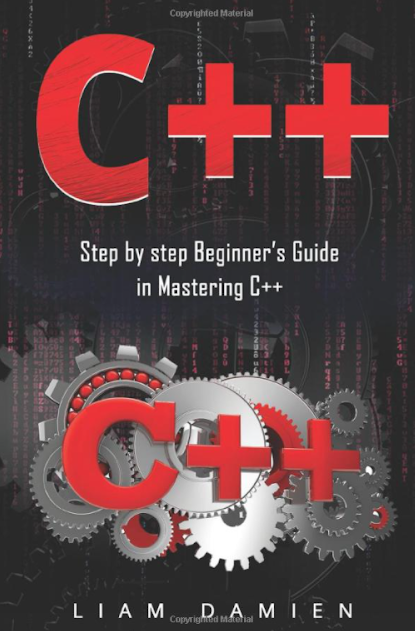
Written by Liam Damien, this book aims on giving a detailed view of the language. “Step by Step Beginners Guide for Mastering in C++” is a good book to clear all your C++ basics.
It literally starts from the basics by letting you in the history and invention of the subject.
Like any good book, they even cover programming concepts, how to write in C++, standards and procedures, data types, references, variables, pointers, arrays, function, structures, and more. A good number of examples with solutions are provided by the author to help your practice.
Once you are done with all these resources, then you can read out the top IDEs and code editors for C/C++. It will help you to showcase your programming skills in no time.
Read More: 13 Best IDEs for C and C++ Developers
Best Platforms to Practice C/C++ Programming Online
Practicing regularly is essential if you want to learn C++ effectively and apply concepts in real-world scenarios. The main difference between the websites below and the previously mentioned resources is that the latter requires a solid grasp of the basics. It involves various challenges related to C/C++ programming language. You can solve these to test your knowledge and to have a complete picture.
1. Codeforces
Codeforces is one of the most popular competitive programming platforms. It offers regular contests and a large collection of problems that help improve problem-solving skills in C/C++.
2. Project Euler
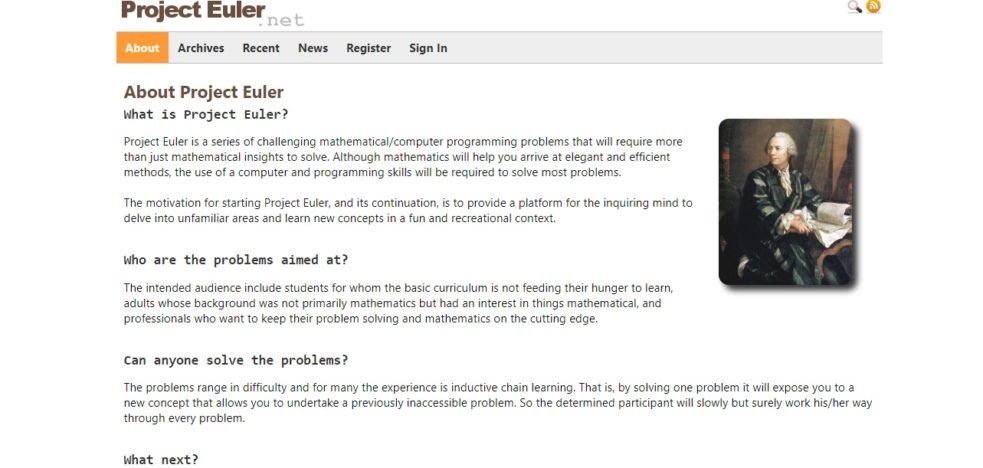
It is a website designed for everyone who has a hunger to learn more. It is packed with a collection of problem/solving challenges related to mathematics as well as computer programming related problems. Remember, it requires more than mathematical knowledge to solve these puzzles. You can even track your progress on this website.
3. Cpp Alliance
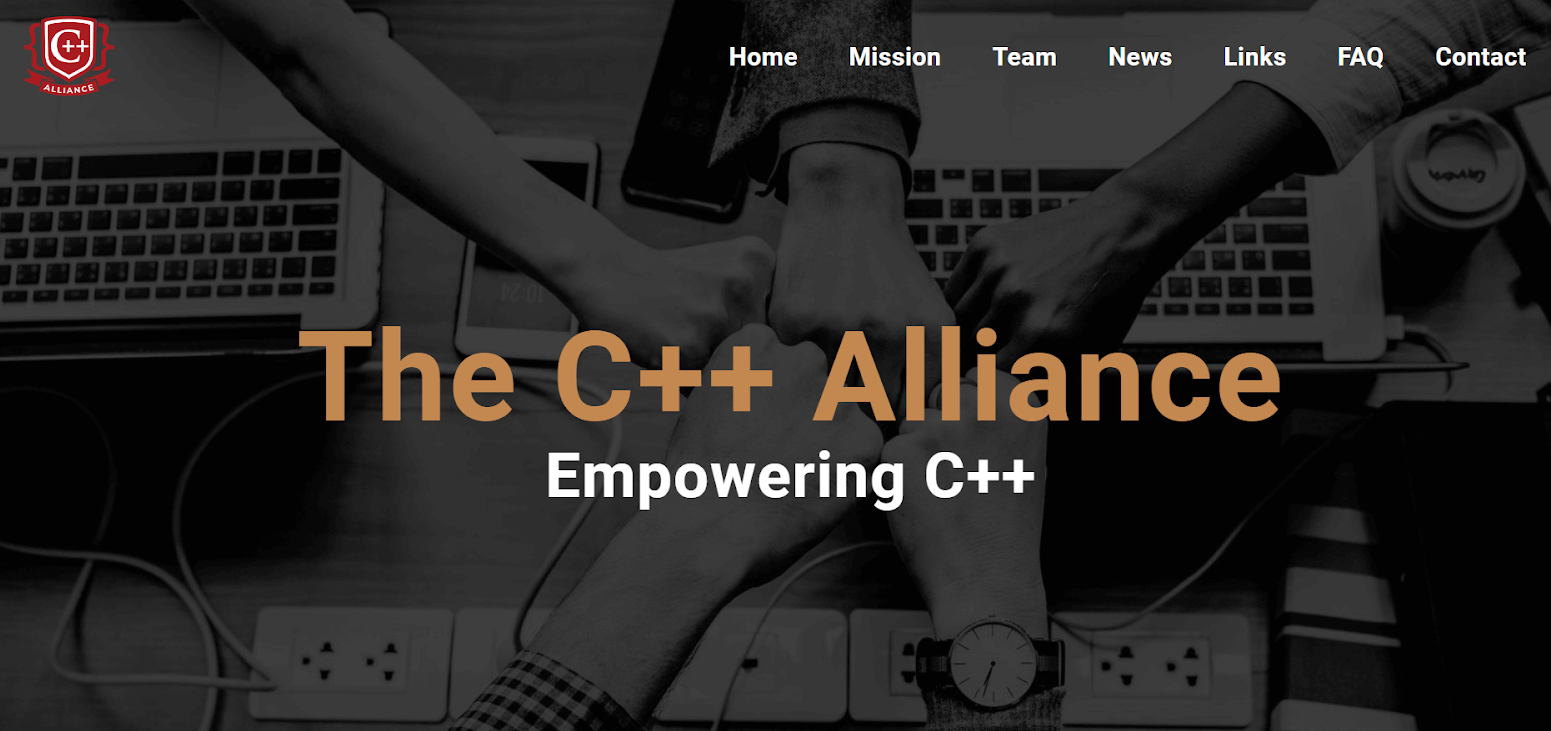
They are a community that aims to make the C++ programming language accessible. The team feels due to a lack of resources many are missing out on such a powerful tool. Programming language. To solve this issue, they provide funds, support educational resources, have an evolved C++ code library, and more.
They provide free, high quality, non-proprietary C++ libraries. They even administer the largest C++ Slack community.
How to Learn C/C++ Effectively?
Practical Strategy for Faster Learning
Learning C/C++ requires a hands-on approach rather than passive consumption.
What You Should Do?
- Practice coding daily
- Solve problems on coding platforms
- Build small to medium-sized projects
- Read and analyze existing code
- Debug your own programs regularly
Common Mistakes to Avoid
- Focusing only on tutorials without coding
- Ignoring pointers and memory concepts
- Skipping foundational topics
- Jumping into advanced topics too early
Recommended Learning Approach
Start with fundamentals, move gradually to advanced concepts, and continuously apply your knowledge through projects. Consistency is more important than speed.
Best Project Ideas to Learn C/C++
Beginner Projects
- Simple calculator
- Number guessing game
- Basic file handling program
Intermediate Projects
- Student management system
- Library management system
- Command-line utilities
Advanced Projects
- Chat application using sockets
- Mini game or graphics engine
- Custom memory management system
- Basic compiler or interpreter
Frequently Asked Questions About C/C++ Programming
Is C/C++ still relevant in 2026?
Yes. C and C++ remain essential for system-level programming, embedded systems, game development, and performance-critical applications.
Should I learn C or C++ first?
If you are a complete beginner, starting with C helps you understand programming fundamentals. However, if your goal is modern development, you can directly begin with C++.
How long does it take to learn C/C++?
- Basic proficiency: 1–2 months
- Intermediate level: 3–6 months
- Advanced level: 6–12 months with consistent practice
Is C++ harder than Python?
Yes. C++ involves concepts such as pointers, memory management, and complex syntax, which makes it more challenging. However, it provides significantly more control and performance.
Where is C/C++ used today?
C and C++ are widely used in:
- Operating systems
- Game engines
- Web browsers
- Databases
- Embedded systems
- High-performance computing
Are C/C++ developers in demand?
Yes. Skilled C/C++ developers are in demand in industries such as gaming, embedded systems, finance, and system programming.
Conclusion
Finding the best resources to learn C/C++ is only the first step. What truly matters is how consistently you apply what you learn.
In this guide, we covered:
- A complete C++ learning roadmap
- The best websites to learn C++
- Recommended books and practice platforms
- A practical approach to mastering C/C++
If you are serious about becoming a strong developer, start with one resource, follow a structured path, and build projects consistently.
C and C++ are not just programming languages—they are the foundation of high-performance computing.
People Are Also Reading!
- 13 Best IDEs for C and C++ Developers
- Best C/C++ IDEs for Linux (2026) – Ranked for Beginners, Pros, & Ubuntu Users!
- Best Ethical Hacking Books + Setting Up Your Own Hacking Lab Made Easy!
- Top Programming Communities & Developer Forums in 2026!
- Li-Fi: Lighting Up the World’s Internet Connectivity
- An Evolution Of Artificial Intelligence: Past, Present & Future (Infographic)
I learned HTML CSS by using stack overflow. Once I am good with what you frontend design I will consider trying one of the recommendations above to learn core php
Your blog is among the best and most informative.