Technology is advancing at an unprecedented pace, transforming how people live, work, learn, and connect across every continent. From artificial intelligence and advanced robotics to climate innovation, digital healthcare, and next-generation software, Tech globally is reshaping industries and creating new opportunities for businesses and individuals alike. In the US, UK, and around the world, digital transformation is driving smarter cities, cleaner energy, faster communication, and more efficient workplaces. Understanding these emerging technology trends helps readers prepare for future careers, smarter investments, and a rapidly evolving digital economy where innovation is becoming a key driver of global progress.
Global Technology Trends at a Glance
| Technology Area | Current Global Impact | Future Potential |
| Artificial Intelligence | Automates business processes and enhances decision-making. | Autonomous systems and personalized AI assistants |
| Robotics | Improves manufacturing, logistics, and healthcare | Human-robot collaboration across industries |
| Climate Technology | Supports renewable energy and carbon reduction | Net-zero economies and sustainable infrastructure |
| Digital Healthcare | Expands telemedicine and AI-assisted diagnostics | Predictive and personalized healthcare |
| Software Innovation | Powers cloud computing and cybersecurity | Intelligent, fully connected digital ecosystems |
| Digital Transformation | Modernizes organizations and public services | Smart cities and highly automated industries |
Why Tech Globally Matters More Than Ever
Technology is no longer limited by national borders. A breakthrough developed in one country can quickly influence businesses, schools, hospitals, and governments around the world. This rapid exchange of ideas is why Tech globally has become one of the biggest drivers of innovation and economic growth. Cloud computing, artificial intelligence, and faster internet connections allow organizations to adopt new solutions within months instead of years.
Global technology trends are helping businesses improve productivity through automation, smarter software, and data-driven decision-making. Governments are using digital platforms to deliver public services more efficiently, while educational institutions are expanding access to online learning and AI-powered study tools. In healthcare, innovations such as remote consultations, wearable devices, and AI-assisted diagnostics are making medical care more accessible and accurate.
Technology is also supporting climate solutions by improving renewable energy systems, smart electricity grids, and environmental monitoring. In transportation, electric vehicles, intelligent traffic management, and connected logistics networks are helping reduce emissions while improving efficiency.
For individuals, the impact is visible in everyday life. People use mobile banking, digital payments, smart home devices, language translation apps, and virtual collaboration tools to save time and stay connected. Whether someone lives in the US, the UK, or another part of the world, global technology trends continue to create new opportunities, improve quality of life, and prepare societies for a more connected digital future.
How Global Technology Creates Impact
| Sector | Traditional Approach | Technology-Driven Approach |
| Business | Manual operations and paper records | AI, automation, and cloud-based workflows |
| Healthcare | In-person consultations only | Telemedicine, wearable devices, and AI diagnostics |
| Education | Classroom-only learning | Online courses, virtual classrooms, and AI tutors |
| Transportation | Conventional traffic systems | Smart traffic management and electric mobility |
| Climate | Reactive environmental management | Smart energy grids and real-time climate monitoring |
| Everyday Life | Cash payments and offline services | Digital banking, smart devices, and connected applications |
Top Technology Trends Making Headlines in 2026
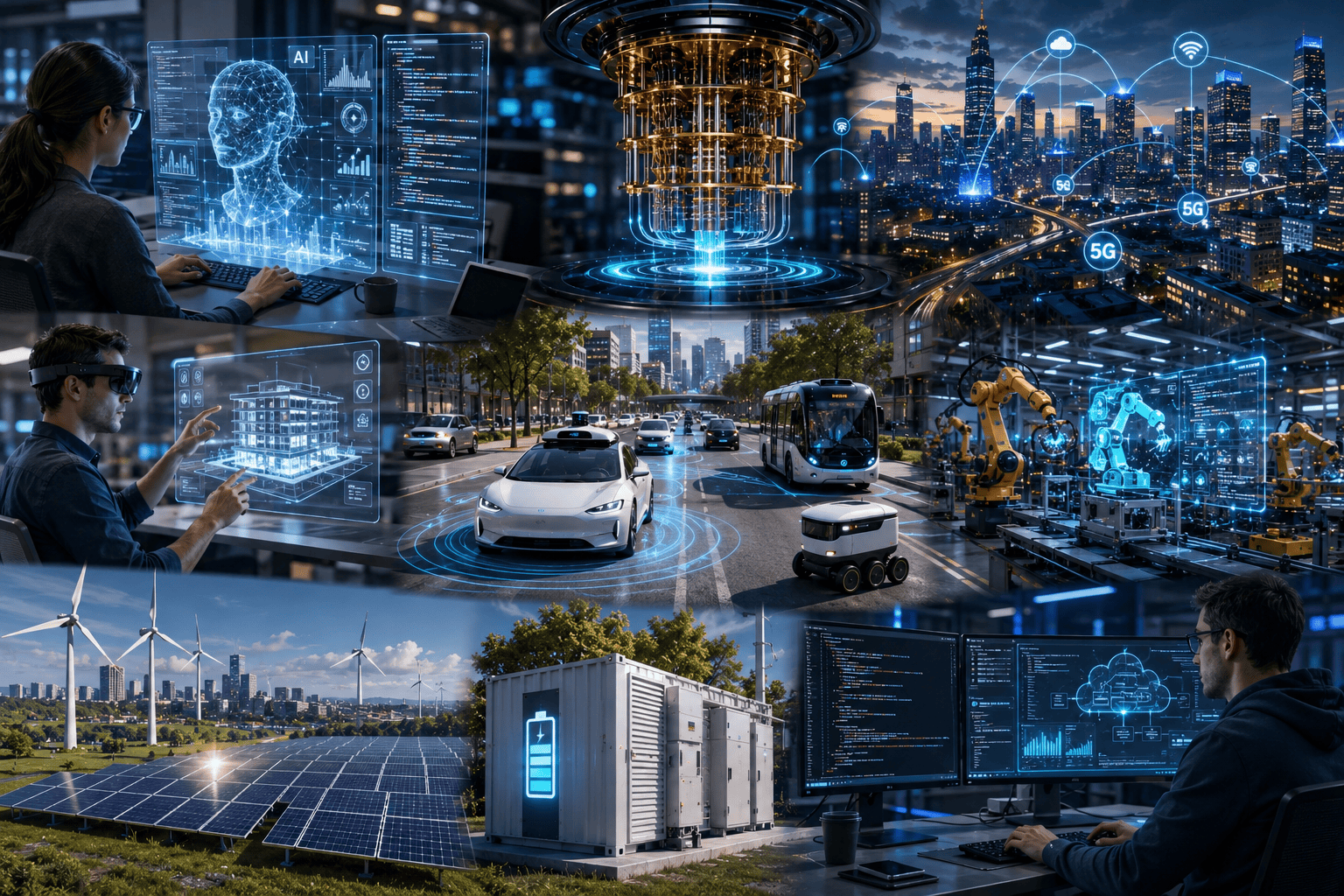
Technology continues to evolve at a remarkable pace, with breakthroughs influencing nearly every industry. From artificial intelligence that creates original content to cleaner energy solutions and smarter transportation, these innovations are changing how people work, communicate, and solve global challenges. The following trends represent some of the most important developments shaping Tech globally in 2026.
Generative AI Beyond Chatbots
Generative AI has expanded far beyond answering questions in chat interfaces. Today, it helps students receive personalized learning support, assists doctors in summarizing medical records, enables marketers to create campaigns faster, and supports software developers by generating and reviewing code. Researchers use AI to analyze large datasets, while designers create prototypes, images, and product concepts in a fraction of the usual time. Businesses are also adopting AI to automate repetitive tasks such as document processing, customer support, scheduling, and report generation.
Despite these advantages, responsible AI adoption remains essential. Organizations are investing in human oversight, transparency, privacy protection, and bias reduction to ensure AI is used ethically. As the technology continues to improve, generative AI is expected to become a trusted partner that enhances human creativity and productivity rather than replacing it.
Quantum Computing Moves Toward Reality
Quantum computing uses the principles of quantum physics to process information differently from traditional computers. While a classical computer handles calculations one step at a time using bits, quantum computers use quantum bits, or qubits, which can represent multiple possibilities simultaneously. This allows them to solve certain highly complex problems much faster than today’s computers.
Although still in the early stages of development, quantum computing has enormous potential. Researchers expect it to accelerate drug discovery, improve financial risk analysis, optimize global supply chains, and solve scientific problems that would otherwise require years of computation. Businesses and governments are investing heavily in quantum research because it could transform industries that depend on advanced data analysis and large-scale optimization.
Edge Computing Powers Real-Time Decisions
Edge computing processes data closer to where it is created instead of sending everything to distant cloud servers. By reducing the distance that information must travel, systems can respond much faster while lowering network congestion and improving reliability.
This technology is becoming increasingly important for smart cities, connected factories, healthcare devices, and Internet of Things (IoT) networks. For example, a smart traffic system can instantly adjust traffic signals based on road conditions, while factory equipment can detect mechanical issues before failures occur. Hospitals also benefit from wearable devices that continuously monitor patients and provide immediate alerts when abnormal readings appear. As connected devices continue to multiply, edge computing will play a critical role in enabling fast, secure, and efficient decision-making.
Augmented Reality Expands Beyond Gaming
Augmented reality (AR) is no longer limited to gaming and entertainment. It overlays digital information onto the real world, creating interactive experiences that improve learning, shopping, and workplace productivity.
Educational institutions use AR to help students explore science experiments, historical landmarks, and complex engineering concepts through immersive visualizations. Retailers allow customers to virtually try on clothing, glasses, or furniture before making purchases. Architects and engineers can preview building designs directly on construction sites, while healthcare professionals use AR for medical training and surgical planning. Remote workers also benefit from AR collaboration tools that provide visual guidance during equipment maintenance and technical support. These practical applications continue to expand as AR hardware becomes more affordable and accessible.
Autonomous Vehicles Continue to Advance
Autonomous transportation technologies continue to improve through advances in artificial intelligence, sensors, cameras, and mapping systems. Self-driving cars are undergoing extensive testing, while autonomous trucks are being developed to improve freight transportation efficiency. Delivery robots are becoming more common for short-distance deliveries, and some cities are exploring self-driving public transportation services.
These innovations promise safer roads, reduced traffic congestion, lower transportation costs, and greater mobility for elderly and disabled individuals. However, challenges remain, including regulatory approval, cybersecurity risks, unpredictable road conditions, and public trust. Governments, manufacturers, and technology companies are working together to establish safety standards and legal frameworks that support the responsible deployment of autonomous transportation systems.
Sustainable Technology Shapes the Future
Sustainability has become one of the most important priorities in global technology development. Companies are investing in renewable energy, advanced battery storage, smart electricity grids, and environmentally friendly manufacturing processes to reduce carbon emissions and improve resource efficiency.
Green data centers are lowering energy consumption through improved cooling technologies and renewable power sources. Battery innovations are extending the range of electric vehicles while reducing charging times. Smart grids balance electricity demand more efficiently, allowing renewable energy sources such as solar and wind power to integrate more effectively into national energy systems. Carbon capture technologies and circular manufacturing practices are also helping industries reduce waste and meet environmental goals. These innovations demonstrate how technology can support both economic growth and long-term environmental sustainability.
Software Industry Innovations
The software industry continues to evolve rapidly as organizations embrace cloud-native development, automation, and stronger cybersecurity practices. Modern applications are designed to scale quickly through cloud infrastructure, allowing businesses to respond faster to changing customer demands.
AI-assisted software development helps programmers write, test, and debug code more efficiently, while low-code and no-code platforms enable non-technical users to build business applications with minimal programming knowledge. DevOps practices encourage closer collaboration between development and operations teams, leading to faster software releases and improved reliability. At the same time, cybersecurity remains a top priority as businesses strengthen their defenses against increasingly sophisticated digital threats. Together, these innovations are making software development faster, more secure, and more accessible across industries.
Emerging Technologies at a Glance
| Technology | Primary Purpose | Major Industries | Current Adoption | Future Potential |
| Generative AI | Content creation and business automation | Healthcare, marketing, education | High | Very High |
| Quantum Computing | Complex problem-solving | Finance, scientific research, logistics | Early | Extremely High |
| Edge Computing | Real-time data processing | Manufacturing, IoT, healthcare | Growing | High |
| Augmented Reality | Interactive digital experiences | Retail, education, healthcare | Growing | High |
| Autonomous Vehicles | Smart mobility and automation | Transportation, logistics | Moderate | Very High |
| Sustainable Technology | Environmental protection and clean energy | Energy, construction, manufacturing | High | Extremely High |
The 7 Core Technologies Transforming Modern Society
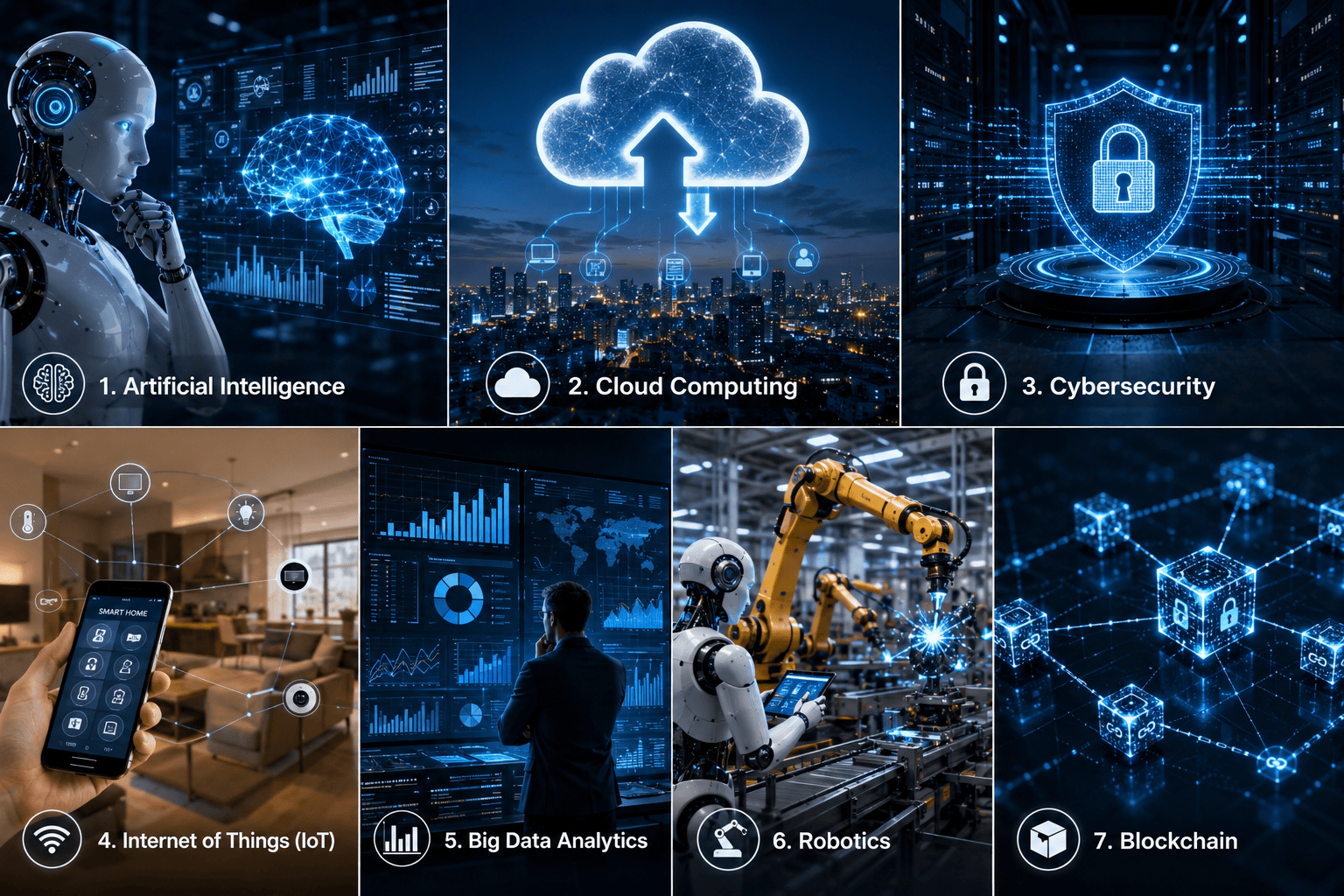
These seven technologies form the foundation of today’s digital economy. Together, they are driving innovation, improving efficiency, and creating new opportunities across industries worldwide.
Artificial Intelligence
Artificial Intelligence (AI) enables computers to learn, analyze information, and make decisions. It powers virtual assistants, recommendation systems, medical diagnostics, fraud detection, and business automation, making everyday tasks faster and more accurate.
Cloud Computing
Cloud computing allows people and organizations to store data and run applications over the internet instead of relying on local computers. It supports remote work, online collaboration, video streaming, and business software while reducing infrastructure costs.
Cybersecurity
As digital services continue to grow, cybersecurity protects sensitive information from hackers, malware, and data breaches. Financial institutions, healthcare providers, governments, and businesses rely on advanced security systems to keep digital assets safe.
Internet of Things (IoT)
The Internet of Things connects everyday devices to the internet so they can collect and exchange data. Smart homes, wearable fitness trackers, connected vehicles, and industrial sensors all use IoT to improve convenience, efficiency, and monitoring.
Big Data Analytics
Big data analytics helps organizations process massive amounts of information to identify trends and make informed decisions. Retailers, hospitals, banks, and governments use data insights to improve customer experiences, predict demand, and optimize operations.
Robotics
Robotics combines engineering, software, and AI to automate physical tasks. Robots assist in manufacturing, warehouse operations, healthcare, agriculture, and hazardous environments where precision, speed, and safety are essential.
Blockchain
Blockchain is a secure digital ledger that records transactions in a transparent and tamper-resistant manner. Beyond cryptocurrencies, it supports supply chain tracking, digital identity verification, healthcare records, and secure financial transactions.
Core Technologies at a Glance
| Core Technology | Main Function | Example |
| Artificial Intelligence | Intelligent automation | Virtual assistants |
| Cloud Computing | Remote computing and storage | Online storage services |
| Cybersecurity | Digital protection | Banking security systems |
| Internet of Things (IoT) | Connected devices | Smart homes |
| Big Data Analytics | Data analysis and insights | Customer behavior analysis |
| Robotics | Physical automation | Factory robots |
| Blockchain | Secure digital records | Digital transactions and supply chains |
The 7 Advanced Technologies Shaping Tomorrow
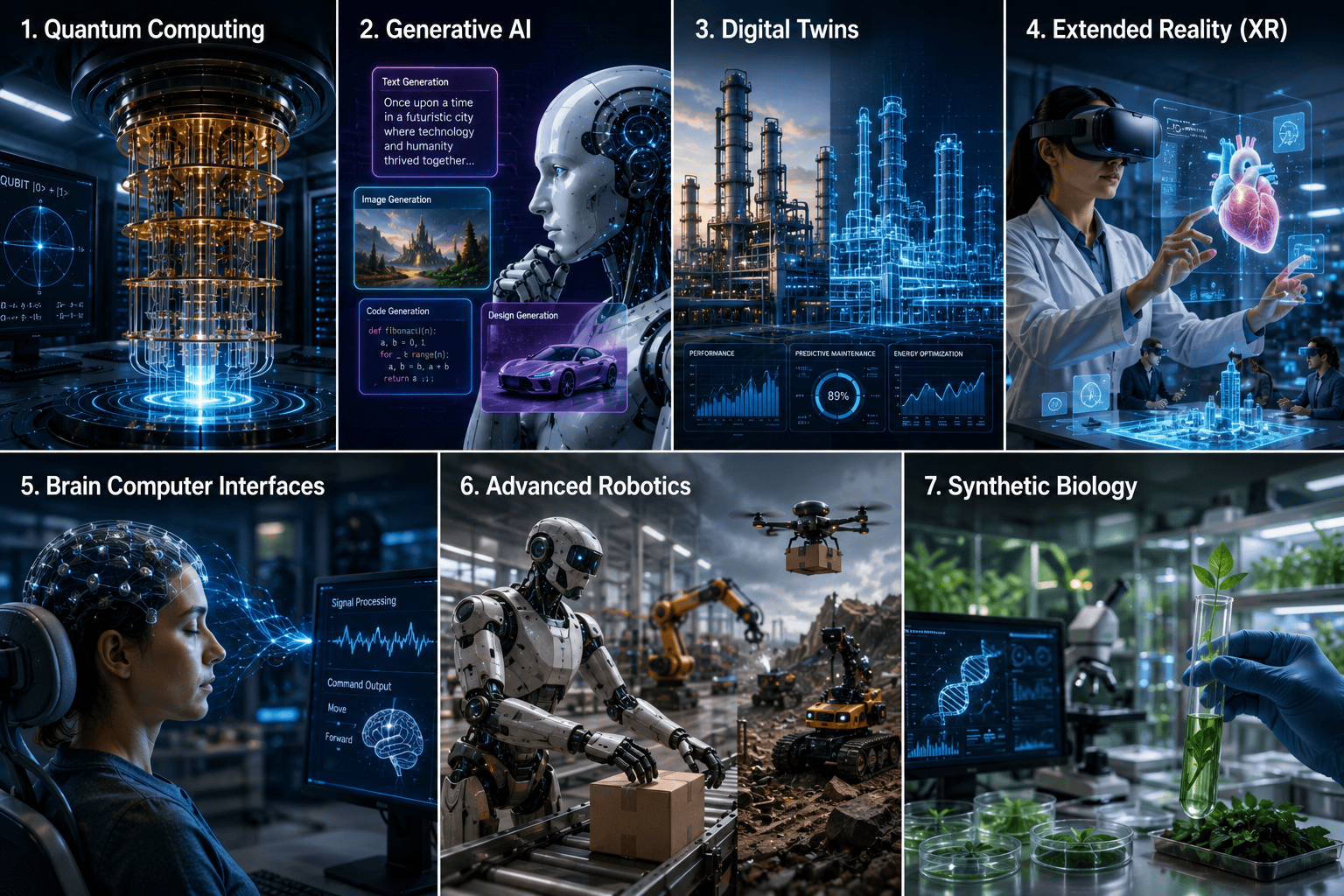
Advanced technologies are pushing beyond today’s digital capabilities to solve problems that were once considered impossible. While many are still developing, they are already being tested in research laboratories, hospitals, factories, and technology companies. Over the next decade, these innovations are expected to reshape industries and improve everyday life.
Quantum Computing
Quantum computing is in its early stages but promises to solve highly complex calculations much faster than traditional computers. It could transform medicine, finance, cybersecurity, and scientific research.
Generative AI
Generative AI is experiencing rapid growth across education, software development, marketing, healthcare, and business operations. It creates text, images, code, and designs while improving productivity and supporting human creativity.
Digital Twins
Digital twins are virtual models of real-world machines, buildings, or entire cities. Manufacturers, healthcare providers, and urban planners use them to simulate performance, predict maintenance needs, and optimize operations before making real-world changes.
Extended Reality (XR)
Extended Reality combines virtual reality (VR), augmented reality (AR), and mixed reality (MR) into immersive digital experiences. It is increasingly used for employee training, education, healthcare, product design, and remote collaboration.
Brain Computer Interfaces
Brain Computer Interfaces (BCIs) create direct communication between the human brain and computers. Although still experimental, they are being explored to help people with paralysis, improve assistive technologies, and advance neurological research.
Advanced Robotics
Advanced robots combine artificial intelligence, computer vision, and sophisticated sensors to perform complex physical tasks. They are expanding into healthcare, manufacturing, agriculture, logistics, disaster response, and space exploration.
Synthetic Biology
Synthetic biology combines biology and engineering to design new biological systems. Researchers are developing sustainable materials, improved crops, advanced medicines, and environmentally friendly manufacturing processes that could address global health and climate challenges.
Advanced Technologies at a Glance
| Advanced Technology | Current Stage | Expected Impact |
| Quantum Computing | Early | Transformational |
| Digital Twins | Growing | High |
| Extended Reality (XR) | Growing | High |
| Brain Computer Interfaces | Experimental | Very High |
| Advanced Robotics | Expanding | High |
| Synthetic Biology | Emerging | High |
| Generative AI | Rapid Growth | Transformational |
Industries Being Reshaped by Future Technology
Emerging technologies are transforming industries by improving efficiency, enabling smarter decisions, enhancing customer experiences, and supporting long-term sustainability. As Tech globally continues to evolve, organizations are adopting artificial intelligence, automation, cloud computing, and data analytics to remain competitive and meet changing consumer expectations.
Healthcare is using AI-assisted diagnostics, wearable devices, and telemedicine to improve patient care and enable faster treatment. Financial institutions rely on advanced analytics, digital payments, and fraud detection systems to provide secure and convenient banking services. In education, online learning platforms, virtual classrooms, and AI tutors are making quality education more accessible.
Manufacturers are introducing smart factories with robotics and predictive maintenance to reduce downtime and increase productivity. Retail businesses personalize shopping experiences through AI recommendations, cashier-less stores, and inventory automation. Agriculture benefits from precision farming, drones, and smart sensors that optimize irrigation, monitor crop health, and reduce resource waste.
Transportation is becoming safer and more efficient through electric vehicles, autonomous driving technologies, and intelligent traffic management systems. Meanwhile, the entertainment industry is embracing streaming platforms, immersive experiences, AI-powered content recommendations, and virtual production techniques to deliver engaging experiences for audiences worldwide.
Together, these innovations are helping industries operate more efficiently while creating better services, stronger sustainability practices, and smarter decision-making.
How Future Technology Is Transforming Industries
| Industry | Key Technologies | Primary Benefits | Real-World Example |
| Healthcare | AI, telemedicine, wearable devices | Faster diagnosis and improved patient care | Remote health monitoring |
| Finance | AI, blockchain, big data | Secure transactions and fraud prevention | Digital banking apps |
| Education | AI, cloud computing, AR/VR | Personalized and flexible learning | AI tutoring platforms |
| Manufacturing | Robotics, IoT, automation | Higher productivity and predictive maintenance | Smart factories |
| Retail | AI, analytics, automation | Personalized shopping and efficient inventory | AI product recommendations |
| Agriculture | IoT, drones, precision analytics | Higher crop yields and resource efficiency | Smart irrigation systems |
| Transportation | Electric vehicles, autonomous systems, IoT | Safer travel and optimized logistics | Intelligent traffic management |
| Entertainment | AI, XR, cloud streaming | Immersive content and personalized experiences | Streaming recommendation engines |
Future Careers and Skills That Will Stay in Demand
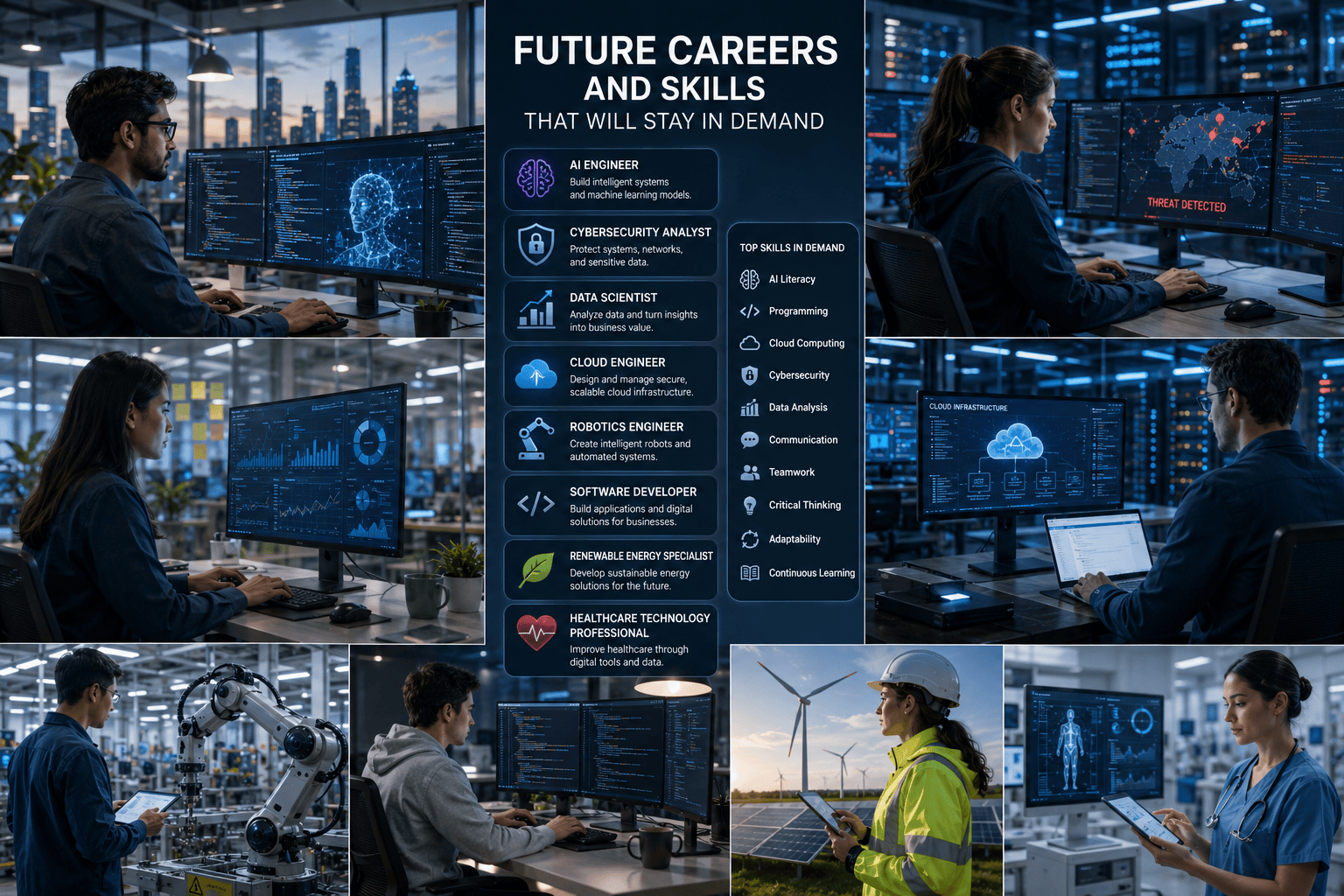
As technology continues to reshape industries, employers are looking for professionals who can combine technical expertise with problem-solving, creativity, and adaptability. In the USA and many other countries, careers related to artificial intelligence, cloud computing, cybersecurity, and digital transformation are expected to remain in high demand for years to come.
One of the fastest-growing careers is the AI engineer, who develops intelligent systems for businesses and consumers. Cybersecurity analysts are equally important as organizations strengthen their defenses against growing cyber threats. Data scientists help companies turn large amounts of information into valuable insights, while cloud engineers design secure and scalable cloud infrastructure. Robotics engineers build automated systems for manufacturing, healthcare, and logistics, and software developers continue to create applications that power modern businesses. Demand is also increasing for renewable energy specialists and healthcare technology professionals as countries invest in clean energy and digital healthcare.
Many people ask, “Which career is in high demand in the USA?” Technology-related roles consistently rank among the fastest-growing occupations due to continued digital innovation.
Another common question is, “What five jobs will remain after 2030?” AI engineers, cybersecurity analysts, software developers, healthcare technology professionals, and renewable energy specialists are expected to remain highly valuable because they address long-term technological and societal needs.
The most in-demand skill is the ability to learn continuously. Employers value AI literacy, programming, cloud computing, cybersecurity, data analysis, communication, teamwork, and critical thinking. As Tech globally continues to evolve, professionals who embrace lifelong learning and adapt to new technologies will be best positioned for long-term career success.
Future-Proof Careers at a Glance
| Career | Growth Outlook | Key Skills |
| AI Engineer | Very High | AI, Python, machine learning |
| Cybersecurity Analyst | Very High | Security, networking, risk management |
| Data Scientist | High | Statistics, machine learning, analytics |
| Cloud Engineer | High | AWS, Azure, cloud architecture |
| Robotics Engineer | High | Automation, robotics, programming |
| Renewable Energy Specialist | Growing | Sustainability, clean energy technologies |
Challenges That Come With Rapid Technological Growth
While technological innovation creates enormous opportunities, it also introduces challenges that governments, businesses, and society must address responsibly. As Tech globally continues to advance, balancing innovation with safety, ethics, and public trust has become more important than ever.
Privacy remains a major concern as organizations collect and process increasing amounts of personal data. Strong cybersecurity measures are essential to protect individuals and businesses from cyberattacks, identity theft, and data breaches. At the same time, AI ethics has become a key focus, with growing emphasis on transparency, fairness, accountability, and reducing bias in automated systems.
The digital divide is another challenge, as not everyone has equal access to reliable internet, modern devices, or digital education. Governments and policymakers are also working to develop regulations that encourage innovation while protecting consumers, ensuring fair competition, and maintaining security.
Rapid automation is changing the workforce by reducing some repetitive jobs while creating demand for new technical and digital roles. This makes continuous learning and workforce reskilling increasingly important. Environmental concerns, including energy consumption and electronic waste, also require sustainable technology practices. By combining responsible innovation with ethical standards, effective regulation, and ongoing education, societies can maximize the benefits of technology while minimizing its risks.
What the Next Decade Could Look Like
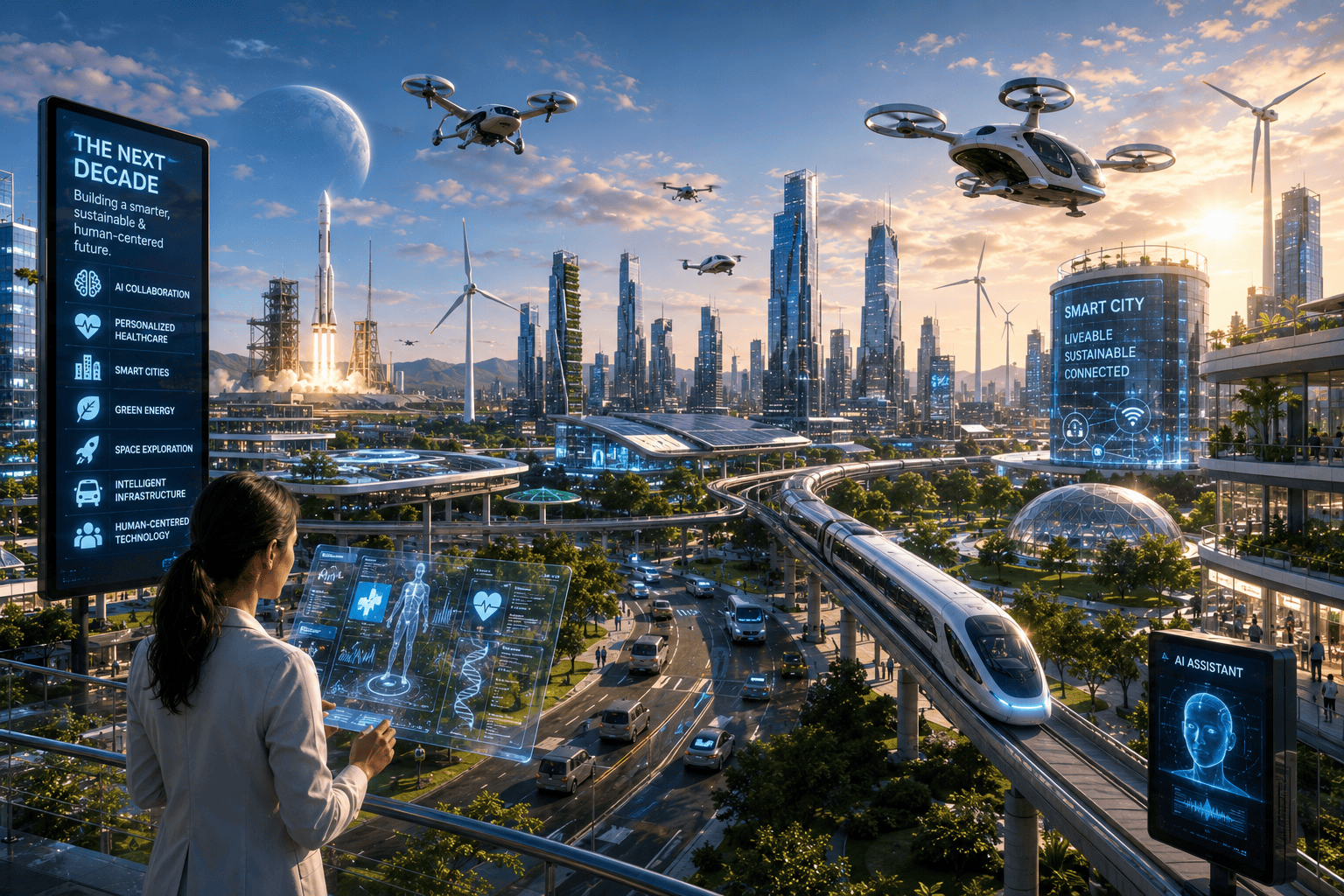
The next decade is likely to bring technologies that are more intelligent, sustainable, and focused on improving people’s daily lives. Rather than replacing humans, AI will increasingly work alongside them to boost productivity, creativity, and decision-making. Personalized healthcare powered by data and AI could enable earlier diagnoses and more effective treatments, while smart cities may use connected infrastructure to improve transportation, energy efficiency, and public services.
Advances in renewable energy, battery storage, and intelligent power grids will continue supporting global sustainability goals. Space exploration is also expected to expand through new satellite technologies, scientific missions, and commercial innovation. At the same time, human-centered technology will place greater emphasis on privacy, accessibility, security, and ethical development. As Tech globally continues to evolve, the greatest progress will come from combining innovation with responsible governance and collaboration.
The Next Decade at a Glance
| Future Area | Expected Development | Potential Benefit |
| AI Collaboration | Humans working alongside intelligent systems | Higher productivity and better decision-making |
| Personalized Healthcare | AI-driven diagnostics and tailored treatments | Improved patient outcomes |
| Smart Cities | Connected infrastructure and intelligent services | Greater efficiency and quality of life |
| Green Energy | Advanced renewable energy and smart grids | Lower carbon emissions |
| Space Exploration | Commercial missions and advanced satellite systems | Scientific discovery and global connectivity |
| Intelligent Infrastructure | AI-powered transportation and utilities | Safer and more efficient public services |
| Human-Centered Technology | Privacy, accessibility, and ethical AI | Increased trust and responsible innovation |
Frequently Asked Questions (FAQ)
What are the 7 core technologies?
The seven core technologies are Artificial Intelligence (AI), Cloud Computing, Cybersecurity, Internet of Things (IoT), Big Data Analytics, Robotics, and Blockchain. Together, they power digital transformation across healthcare, finance, education, manufacturing, and retail. These technologies improve efficiency, strengthen security, support automation, and help organizations make better data-driven decisions.
What are the 7 advanced technologies?
The seven advanced technologies include Quantum Computing, Generative AI, Digital Twins, Extended Reality (XR), Brain Computer Interfaces, Advanced Robotics, and Synthetic Biology. Although some are still developing, they are expected to transform industries by enabling smarter automation, scientific breakthroughs, immersive experiences, and sustainable innovation over the next decade.
Which technology is booming now?
Generative AI is currently one of the fastest-growing technologies worldwide. Businesses are using it for content creation, software development, customer support, healthcare, education, and business automation. Cloud computing, cybersecurity, and sustainable technology are also experiencing rapid growth as organizations continue investing in digital transformation and secure technology infrastructure.
What is the next big trend?
The next major technology trend is the combination of AI with intelligent automation, edge computing, and connected devices. Future innovations are expected to include personalized healthcare, autonomous systems, smart cities, and human-centered AI that works alongside people while emphasizing privacy, security, and responsible development.
Which new tech is most promising?
While many emerging technologies show strong potential, Quantum Computing and Generative AI stand out because of their ability to solve complex problems, accelerate research, improve productivity, and create entirely new business opportunities. Sustainable technology and advanced robotics are also expected to have significant long-term global impact.
What is Tech globally?
Tech globally refers to the worldwide development, adoption, and influence of technology across countries and industries. It includes innovations such as AI, robotics, cloud computing, renewable energy, healthcare technology, and digital transformation that shape economies, businesses, governments, and everyday life around the world.
What are the top new technologies in 2026?
Some of the leading technologies in 2026 include Generative AI, Quantum Computing, Edge Computing, Extended Reality (XR), Digital Twins, Sustainable Technology, Advanced Robotics, and AI-assisted software development. These innovations are driving greater efficiency, smarter decision-making, and improved customer experiences across multiple sectors.
How is generative AI changing industries?
Generative AI helps organizations create content, generate software code, analyze data, automate workflows, and improve customer service. It supports professionals in education, healthcare, marketing, finance, and research by increasing productivity while allowing people to focus on creative and strategic work.
Why is quantum computing important?
Quantum computing can process highly complex calculations far more efficiently than conventional computers for certain tasks. It has the potential to accelerate drug discovery, optimize supply chains, improve financial modeling, strengthen scientific research, and solve problems that are currently beyond the reach of classical computing.
What is edge computing used for?
Edge computing processes information close to where data is generated instead of relying entirely on centralized cloud servers. It is widely used in smart factories, connected vehicles, healthcare monitoring, industrial automation, smart cities, and IoT devices where fast, reliable, and low-latency processing is essential.
How is sustainable technology helping the environment?
Sustainable technology reduces environmental impact by improving renewable energy systems, increasing energy efficiency, supporting electric vehicles, developing smarter power grids, and promoting eco-friendly manufacturing. These innovations help lower carbon emissions, conserve natural resources, and support long-term environmental sustainability.
Which career is in high demand in the USA?
Technology careers remain among the fastest-growing occupations in the USA. AI engineers, cybersecurity analysts, cloud engineers, software developers, data scientists, healthcare technology professionals, and renewable energy specialists continue to experience strong demand as businesses expand their digital capabilities.
What 5 jobs will remain after 2030?
Five careers expected to remain highly valuable after 2030 are AI engineer, Cybersecurity Analyst, Software Developer, Healthcare Technology Professional, and Renewable Energy Specialist. These roles address long-term needs in automation, digital security, healthcare innovation, and sustainable infrastructure, making them resilient to technological change.
Which skills are most in demand for future technology careers?
The most valuable future skills include AI literacy, programming, cloud computing, cybersecurity, data analytics, machine learning, automation, problem-solving, communication, and adaptability. Employers also increasingly value continuous learning because technology evolves rapidly and professionals must regularly update their knowledge.
What are the latest technologies in the software industry?
Modern software development focuses on cloud-native applications, AI-assisted coding, DevOps, automation, low-code and no-code platforms, cybersecurity, containerization, and microservices. These technologies help organizations build secure, scalable, and reliable applications while reducing development time and improving software quality.
How can beginners start learning future technologies?
Beginners should first build a strong foundation in digital skills, basic programming, and cloud computing before exploring AI, cybersecurity, data analytics, or robotics. Online courses, practical projects, open-source communities, industry certifications, and hands-on experimentation are effective ways to develop job-ready skills and stay current with emerging technology trends.
Read More: The Future of Software Development Isn’t Writing More Code — It’s Building Smarter Systems
Conclusion
Technology continues to evolve across artificial intelligence, cloud computing, robotics, quantum computing, sustainable innovation, and digital transformation, creating new opportunities for individuals, businesses, and governments. Staying informed about Tech globally helps readers understand how these emerging technologies are influencing industries, careers, and everyday life. Building future-ready skills through continuous learning and adaptability will be increasingly valuable in a rapidly changing world. By understanding both the opportunities and challenges of innovation, individuals and organizations can make better decisions, prepare for future developments, and confidently navigate the next generation of technological progress.